The Shift from Simple Automation to Intelligent Orchestration
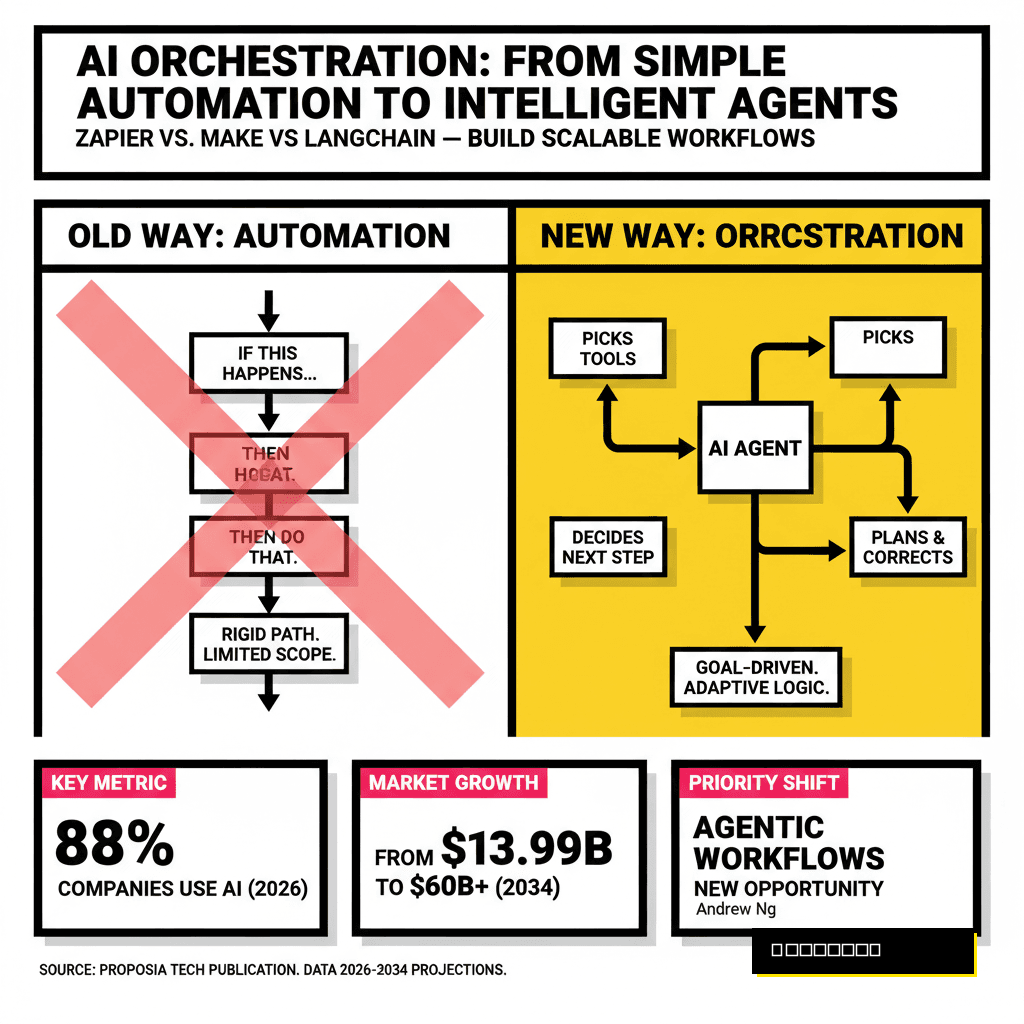
Founders in 2026 no longer ask if they should use AI. Instead, they ask how to coordinate it. The era of single-prompt chatbots has passed. We've entered the age of agentic workflows where AI doesn't just talk but acts, plans, and corrects itself. Andrew Ng, a pioneer in the field, recently noted that building applications using agentic workflows offers the greatest opportunity for businesses today. He argues that this approach delivers more value than simply scaling larger models. You can find his full perspective on why agentic workflows are the new priority for founders who want to stay competitive.
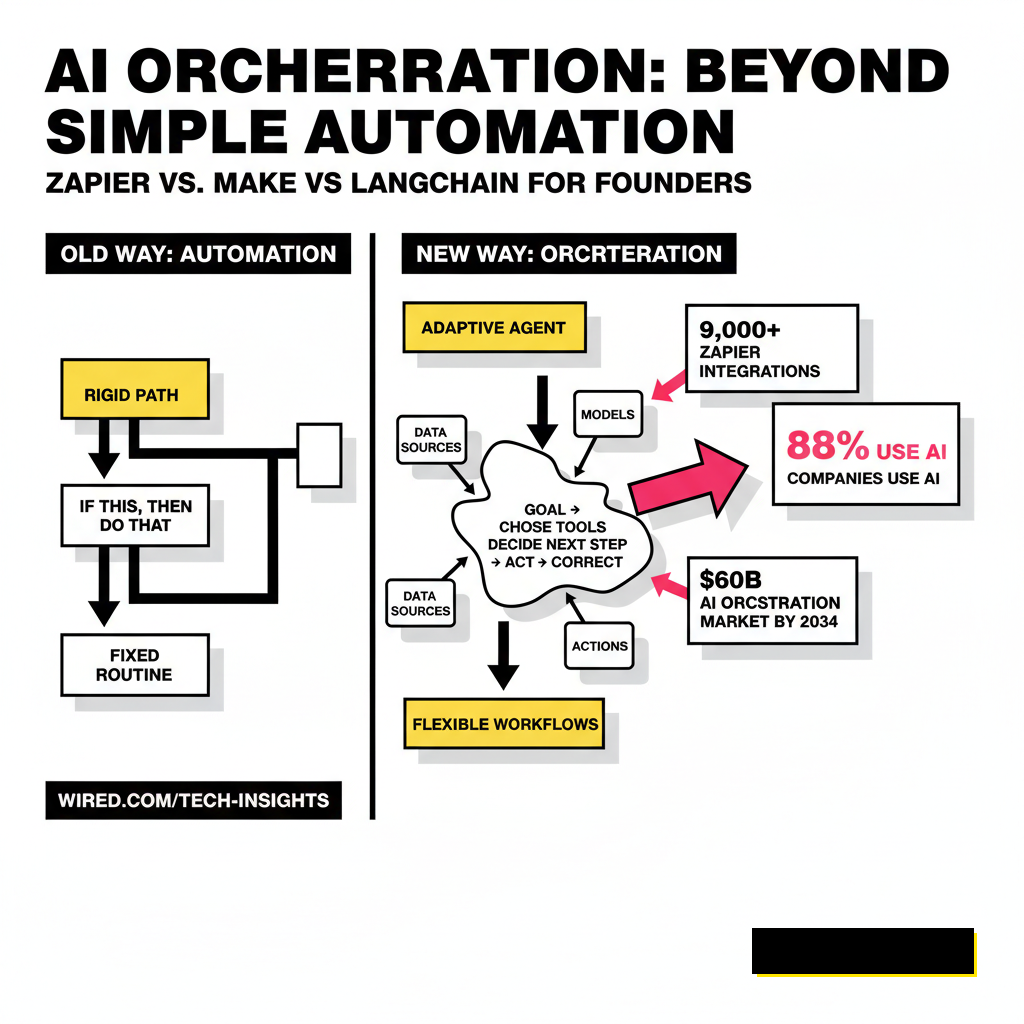
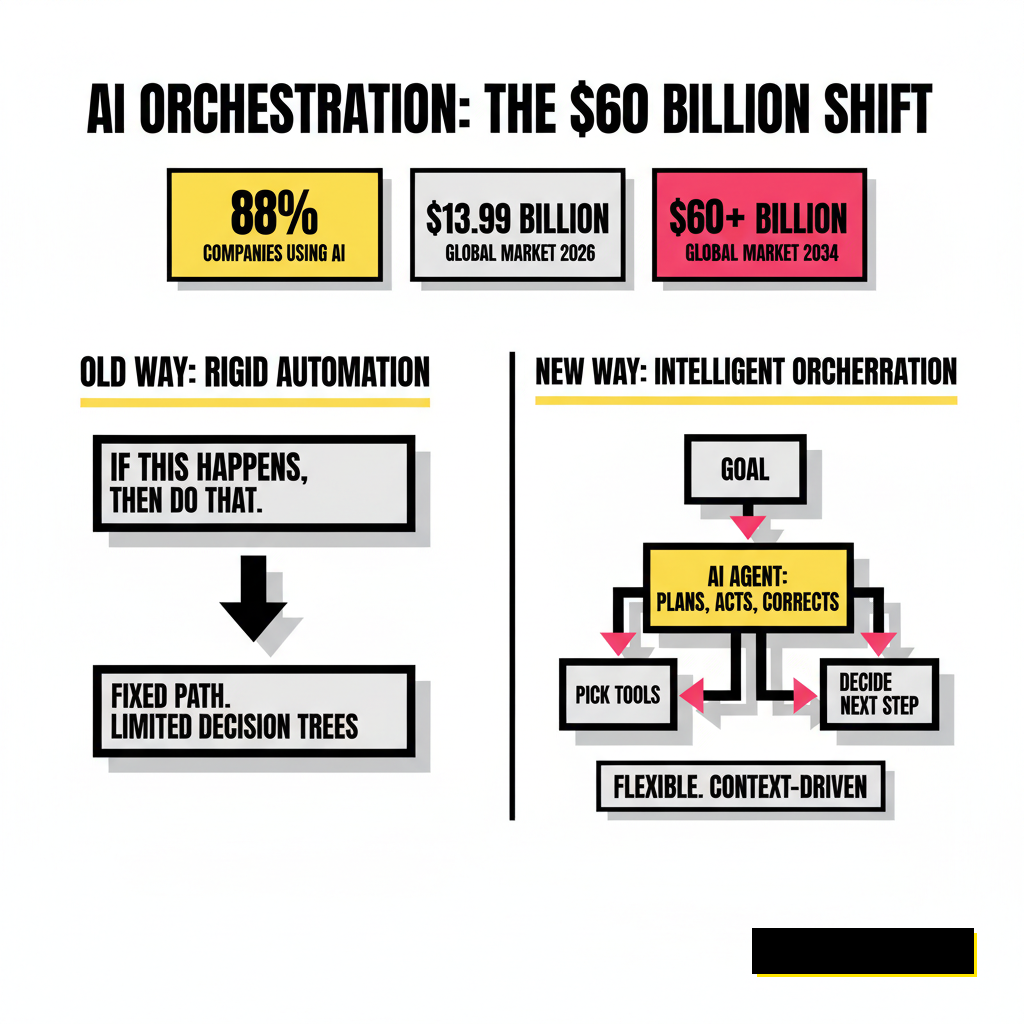
Orchestration differs from the old way of doing things. Traditional automation follows a rigid path: if this happens, then do that. Orchestration allows an AI agent to look at a goal, pick the right tools, and decide on the next step based on what it finds. This flexibility is why the global AI orchestration market is projected to grow from 13.99 billion dollars in 2026 to over 60 billion by 2034. Organizations are moving beyond experimental projects. They are building unified operational environments that connect data, models, and actions into one cohesive system.
Zapier Central: The Low-Code Agentic Playground
Zapier Central has become the go-to starting point for creators who need to build agents without a development team. It lets you create bots that interact with over 9,000 different applications. These aren't just standard Zaps. You give these agents "behaviors" and access to live data sources. A bot can watch your Slack channels, search your Notion database, and then draft an email in Gmail based on the context it finds. This accessibility is a major reason why 88 percent of companies now use AI in at least one business function, up from 78 percent just a year ago.
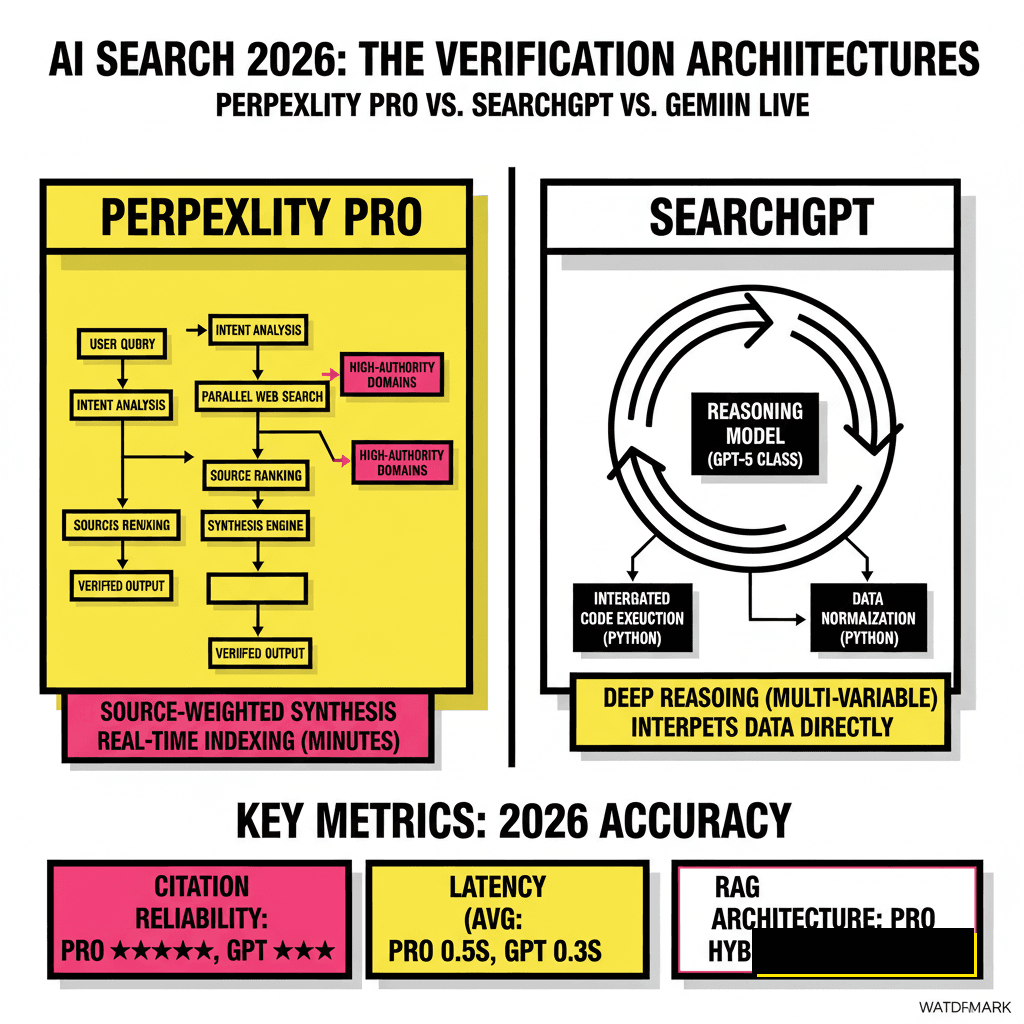
Speed is the primary advantage here. You can stand up a functional agent in minutes. However, this ease of use comes with a trade-off in precision. While Zapier Central is excellent for broad tasks, it can struggle with highly complex logic that requires strict guardrails. For founders, it serves as the perfect prototyping environment. You can test a concept, see if it works, and get immediate feedback. If you find that your bot is making too many errors in a high-stakes environment, you might need to look toward more structured platforms. For those curious about how these agents stack up against search-heavy models, our Perplexity Pro vs. SearchGPT guide offers a deeper look at the underlying data accuracy these systems rely on.
Make.com: Precision Engineering for Visual Ops
Make.com has carved out a niche for founders who need more control than Zapier offers but aren't ready to write pure Python. The 2026 release of "Maia," their conversational AI builder, has changed the game. You can tell Maia to build a lead router that checks LinkedIn and routes data to a CRM, and it will generate the 15-module graph instantly. This isn't just about speed. It's about visibility. The "Make Grid" feature provides an auto-generated map of your entire automation landscape, showing how scenarios connect to data stores across the whole company.
Control is where Make.com truly shines. You can build strict guardrails into your workflows. For example, you can tell the system to reject an output if it contains hallucinated fields or send a task to a human if the AI's confidence score drops below a certain threshold. This "human-in-the-loop" design is essential for tasks with high risk. Many founders use this for customer support or financial processing where an error could be costly. The JPMorgan case study shows how high-level organizations save thousands of hours by implementing these types of structured, governed automations.
Zapier Central
- Best for: Rapid prototyping and low-complexity tasks
- Integration: Direct access to 9,000+ apps
- Ease of Use: High, conversation-based building
- Pricing: Activity-based (can scale quickly)
Make.com
- Best for: Complex logic and high-volume operations
- Visibility: Real-time reasoning panels and system maps
- Governance: Strong human-in-the-loop guardrails
- Pricing: Execution-based (more predictable for loops)
LangChain and LangGraph: The Developer's Architecture
When you reach a level of complexity where visual tools become unwieldy, you move to LangChain. Specifically, LangGraph has become the production standard for complex AI state machines. It models workflows as directed graphs where nodes are agents or functions and edges define transitions. This code-first approach gives you total control over every routing decision. Nothing is hidden behind a platform's abstraction. You write the code that decides exactly how the state moves from one agent to the next.
Reliability is the hallmark of a LangGraph deployment. It features built-in checkpointing, meaning an agent can crash, save its state, and resume exactly where it left off. This is a non-negotiable feature for long-running tasks that might take hours or days to complete. It also integrates natively with LangSmith for observability. When something fails at 2:00 AM, you can trace the exact node that caused the issue and see the data it received. For senior developers choosing between tools, this level of technical debt management is a major factor, much like the ROI considerations of Cursor vs. Copilot in 2026. If you're building a proprietary system that needs to scale to millions of requests, LangChain is the foundation you need.
Choosing Your Orchestration Stack
Selecting the right tool depends on your team's skills and the risk level of your workflows. Most startups start with Zapier Central for internal tasks like meeting summaries or lead notifications. These are low-risk and high-frequency. As the business grows, they often migrate core operations to Make.com to gain better visibility and lower costs. Predictable pricing becomes a factor here. Activity-based models like Zapier's can become expensive for complex AI loops, whereas execution-based models are often more economical for high-volume tasks.
Founders building AI-first products usually bypass the no-code tools entirely and build on LangChain from day one. They need the flexibility to switch between different LLM providers like GPT-5 or Claude 4.5 without rebuilding their entire logic layer. According to a 2026 Gartner report, worldwide AI spending is forecast to reach 2.52 trillion dollars, with infrastructure and software taking the largest slices. Spending that money wisely means choosing a stack that won't require a total rewrite in six months. Use the table below to benchmark your requirements against the available options.
| Feature | Zapier Central | Make.com | LangChain |
|---|---|---|---|
| Skill Level | No-Code | Low-Code | Pro-Code (Python/JS) |
| Control Logic | Conversational | Visual Graph | Coded State Machine |
| Debugging | Basic Logs | Reasoning Panels | Trace-Level (LangSmith) |
| Best Use Case | Personal Productivity | Business Operations | Core AI Product |
Future-Proofing Your AI Strategy
The final step for any founder is implementation. Don't try to automate everything at once. Identify one place in your business where a person makes the same judgment call repeatedly. Ask if that call is consistent enough to encode. If it is, map that first branch today. Whether you use Zapier's quick setup or LangChain's robust architecture, the goal is the same: move your team from doing the work to supervising the systems that do the work.
Success in this new era requires a change in mindset. You are no longer just a manager of people. You're an architect of intelligent systems. By picking the right orchestration layer, you ensure that your startup remains agile, scalable, and ready for whatever the next wave of AI brings. Start small, build for visibility, and never lose sight of the ROI. The future of your business depends on how well your AI agents can talk to each other.