The Shift to Agentic Privacy Governance
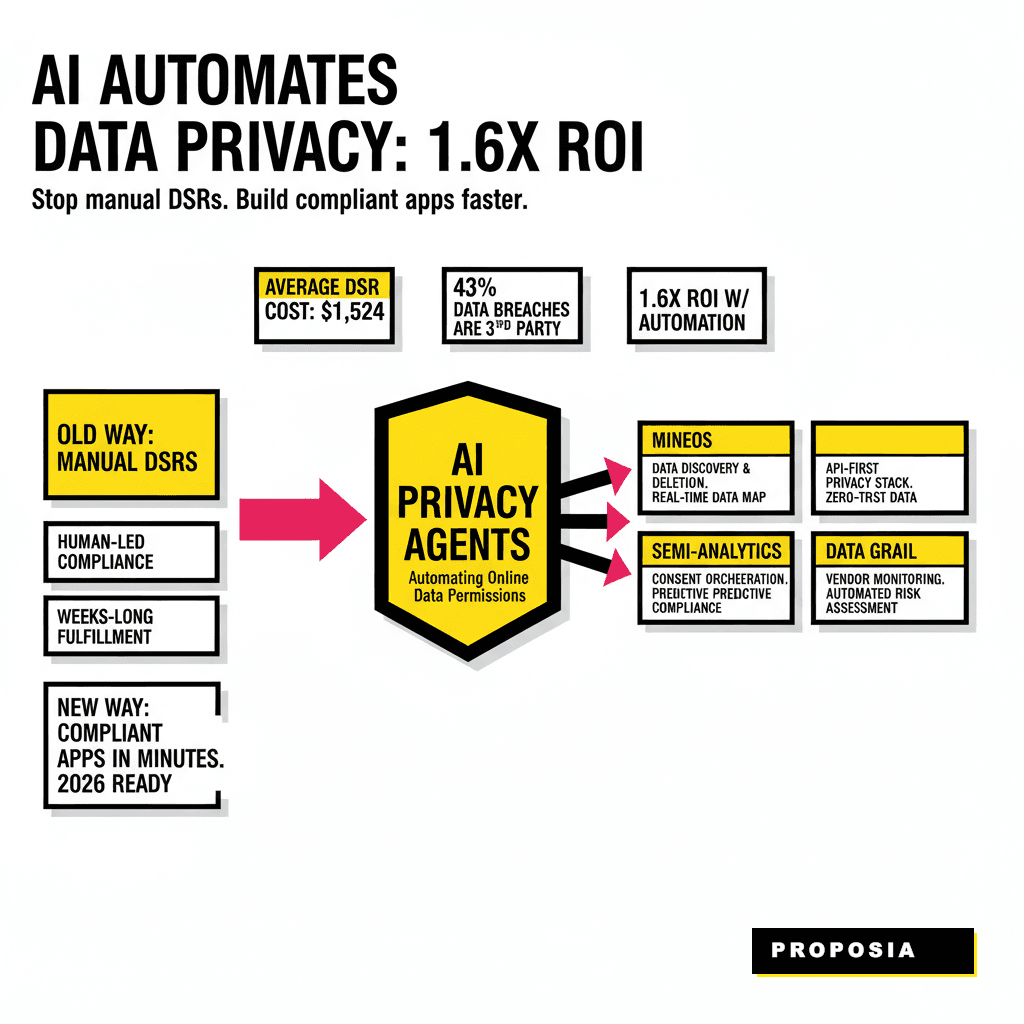
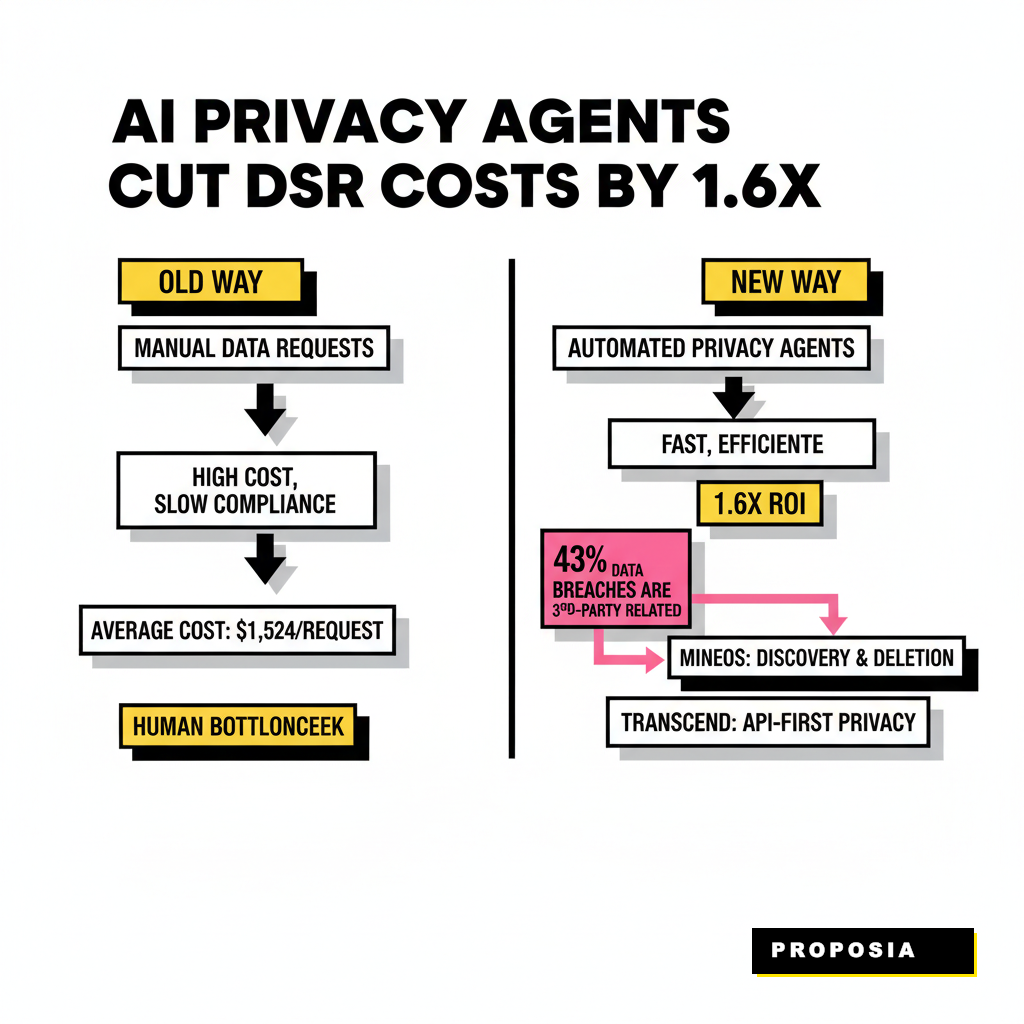
Manual data governance is officially dead. In 2026, the volume of data subject requests (DSRs) has rendered human-led compliance workflows obsolete. According to an April 2026 report from Marketing LTB, the average cost to handle a single data subject request manually has reached $1,524. For developers and IT leaders, this isn't just a budget drain. It represents a significant bottleneck in the software delivery lifecycle. Organizations are moving toward autonomous privacy agents that handle discovery, classification, and revocation without manual intervention.
These agents operate as intelligent layers between your application and the sprawling ecosystem of third-party SaaS tools. They don't just notify you of a deletion request. They execute it across your entire stack. By 2026, only 12% of organizations have fully automated their DSR processing, yet those that have are seeing a 1.6x return on their privacy investment. This gap creates a competitive advantage for teams that integrate agentic privacy early.
MineOS: Automating Data Discovery and Deletion
MineOS has emerged as a leader in the "Privacy Center" movement. Their AI agent specializes in continuous data discovery. Instead of relying on static spreadsheets, MineOS scans your SSO, email, and financial systems to build a real-time map of where customer data lives. This is critical because 43% of data breaches involve third-party vendors. If you don't know a vendor has your data, you can't protect it.
The MineOS agent utilizes advanced NLP to categorize PII (Personally Identifiable Information) across unstructured data sources. When a user submits a deletion request, the agent triggers automated workflows that communicate with third-party APIs to scrub that data. This reduces the time-to-fulfillment from weeks to minutes. Developers can integrate MineOS directly into their internal portals using its robust API, ensuring that compliance is a feature of the product rather than a side task for the legal team.
Transcend: The API-First Privacy Stack
Transcend focuses on the developer experience. It treats privacy as code. Their platform provides a unified API to manage data rights across hundreds of SaaS integrations. One of their standout features is Sombra, a gateway that allows you to fulfill privacy requests without Transcend ever seeing your users' raw data. This zero-trust approach is a major draw for security-conscious engineering teams.
Integrating Transcend into your stack allows for automated data siloing. The agent can detect when a user's consent status changes and automatically update permissions across your database and marketing tools. This level of synchronization is essential for meeting the strict requirements of modern regulations. For teams already focusing on AI governance and compliance audits, Transcend provides the necessary telemetry to prove that data is being handled according to policy.
| Feature | Manual Process | Transcend Agent |
|---|---|---|
| Request Triage | Human Review (Hours) | Instant AI Classification |
| Data Search | Multi-department Slack pings | Automated SaaS Mapping |
| Deletion Execution | Manual Login/Delete | Direct API Revocation |
Incogni: Scaling Data Broker Revocation
While MineOS and Transcend focus on enterprise stacks, Incogni addresses the external threat: data brokers. These companies scrape and sell personal information, often without the individual's knowledge. Incogni's agent acts as a persistent advocate for the user. It maintains a database of over 180 brokers and automatically sends opt-out requests on behalf of its subscribers.
The agent doesn't just send a one-time email. It monitors broker databases for reappearance. If a broker re-adds a user's profile, the Incogni agent re-triggers the deletion process. This persistence is vital in an era where data is constantly being resold and repackaged. From a developer's perspective, understanding how these agents work is crucial for building applications that respect user privacy from the ground up. If your app relies on third-party enrichment, you need to ensure your data sources are compliant with these autonomous opt-out signals.
Skyflow: The Data Privacy Vault for LLMs
Skyflow takes a different approach by preventing PII from ever entering your main systems. It functions as a secure vault that sits between your frontend and your backend. Sensitive data is intercepted and replaced with a non-sensitive token. Your application works with the token, while the actual PII remains encrypted in Skyflow's isolated environment.
This architecture is particularly effective for teams building generative AI applications. By using Skyflow's LLM Privacy Vault, you can redact sensitive information before it reaches a Large Language Model for training or inference. This prevents data leakage and ensures that your AI agents aren't accidentally memorizing user secrets. Managing permissions becomes a matter of controlling who can exchange a token for the real data, simplifying the entire governance model.
Standard Architecture
- PII stored in plaintext databases
- High risk of internal data leaks
- Manual encryption management
- Complex DSR fulfillment
Skyflow Vault
- PII isolated in secure vault
- Applications use non-sensitive tokens
- Automated encryption & tokenization
- Centralized permission control
Integrating Privacy Agents into the CI/CD Pipeline
Privacy is no longer just a legal requirement. It's a technical specification. Developers are increasingly integrating these agents into their CI/CD pipelines to ensure that every new feature is compliant before it ships. This shift toward "Privacy-as-Code" means that data permissions are defined in your configuration files and enforced by autonomous agents at runtime.
Building these capabilities into your workflow doesn't just protect the user. It protects the company from the massive fines associated with non-compliance. In 2026, the global median fine for privacy violations has reached $1.2M. By automating the boring parts of privacy—discovery, mapping, and revocation—you free up your engineering team to focus on building features that drive growth. Whether you're utilizing agentic workflows to automate content or managing a complex fintech stack, privacy must be the foundation of your architecture.
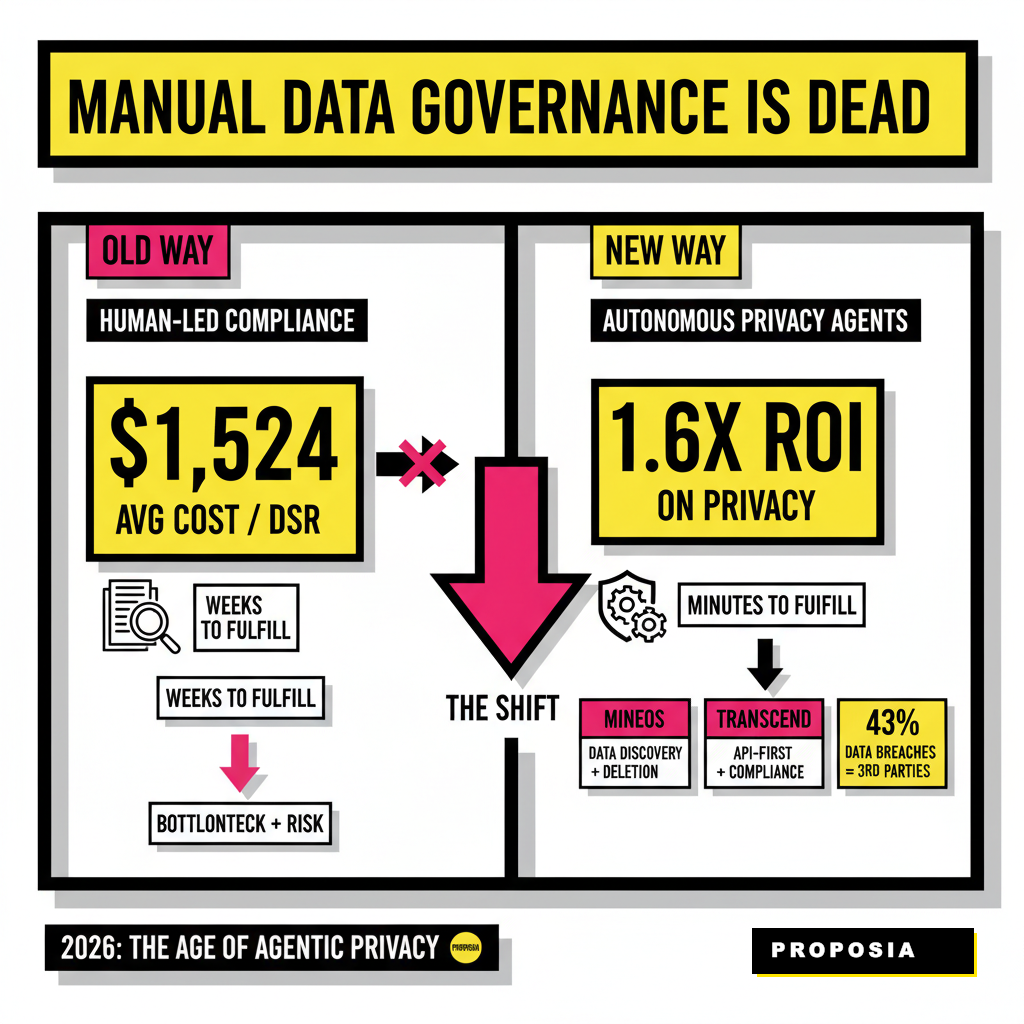
The era of manual privacy management is over. These four agents represent a new standard for online data permissions. By automating the discovery and removal of PII, you reduce risk, save money, and build trust with your users. The choice is clear: automate your privacy stack today or pay for the manual friction tomorrow.