The Shift from Prompting to Autonomous Agentic Loops
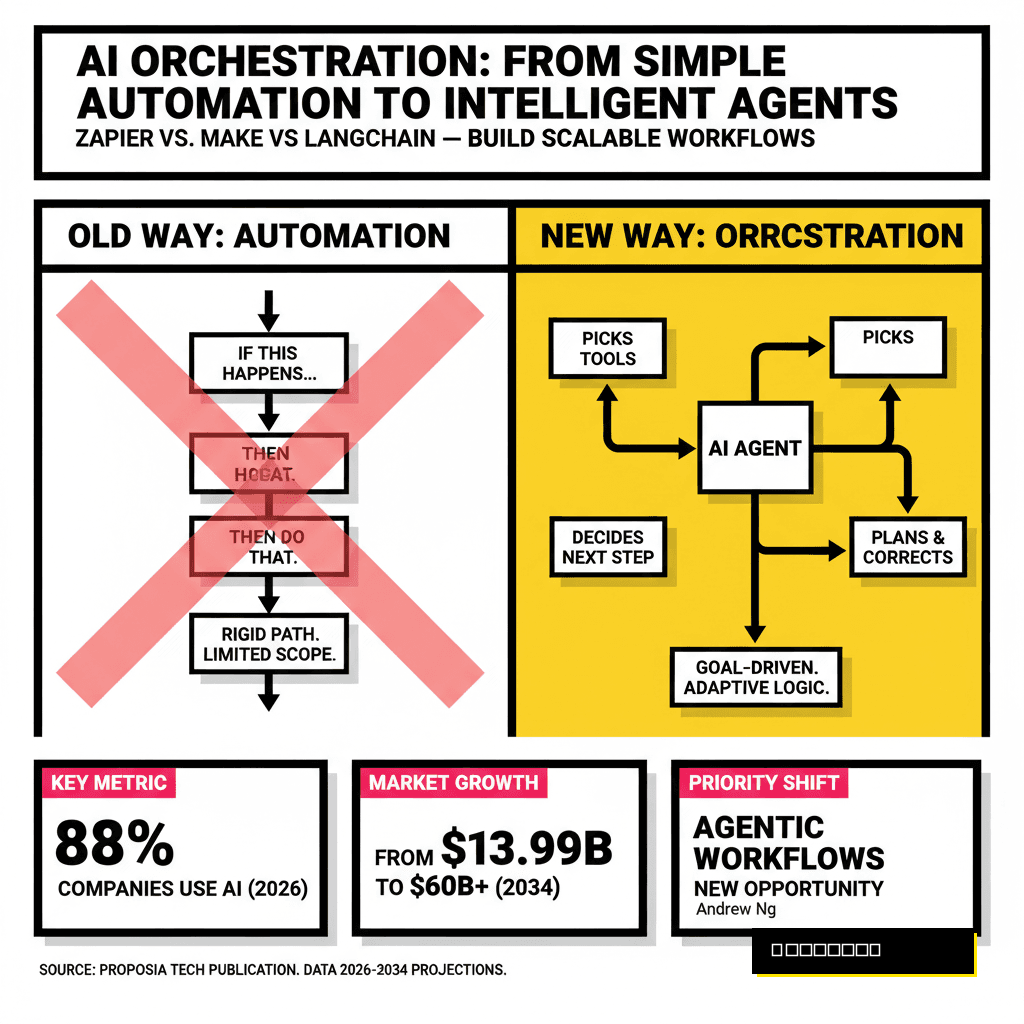
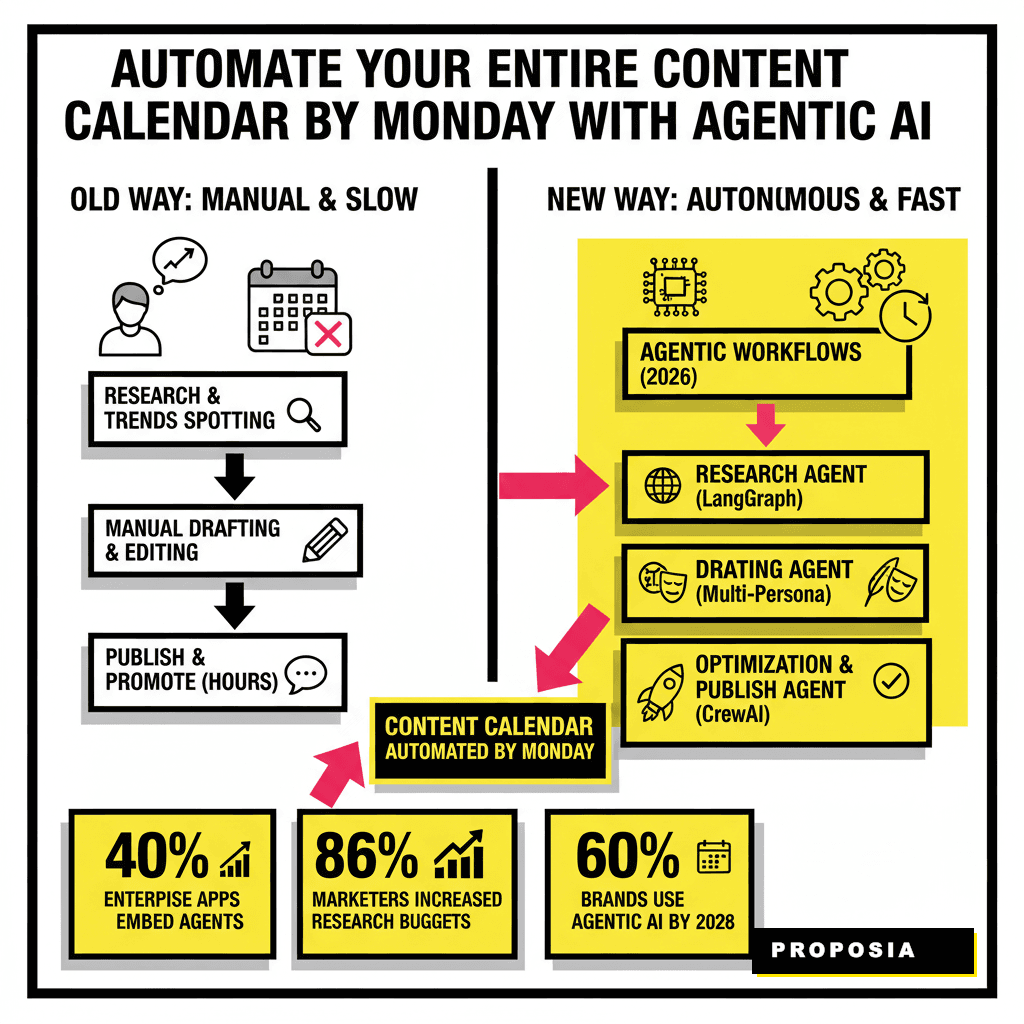
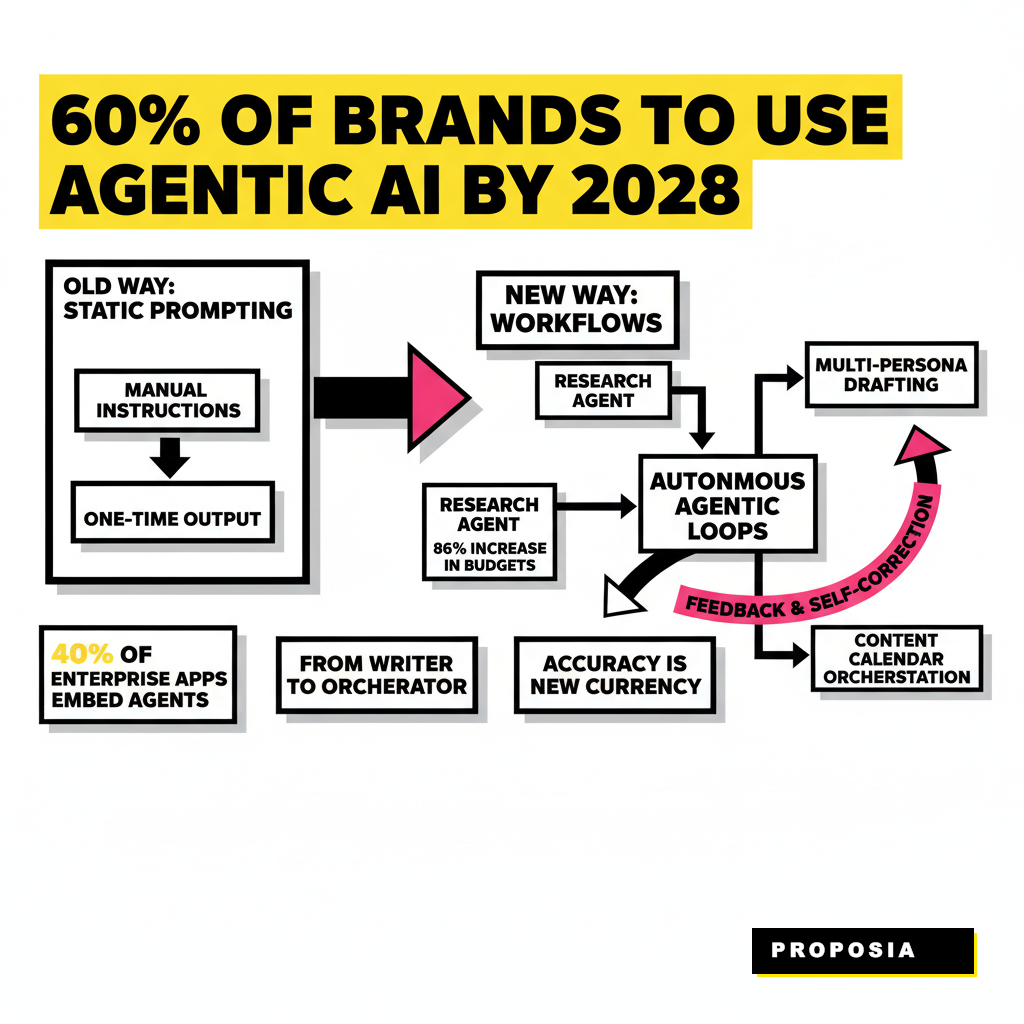
Static prompts are dead. By April 2026, the industry has moved past simple chat interfaces where you manually ask an AI to write a blog post. High-performing teams now use agentic workflows. These systems don't wait for your next instruction. Instead, they operate in loops, making decisions and using tools to achieve a specific goal without constant human oversight. According to a 2026 Gartner report, 40% of enterprise applications now embed these task-specific agents. This shift allows you to move from being a writer to being an orchestrator of digital workers.
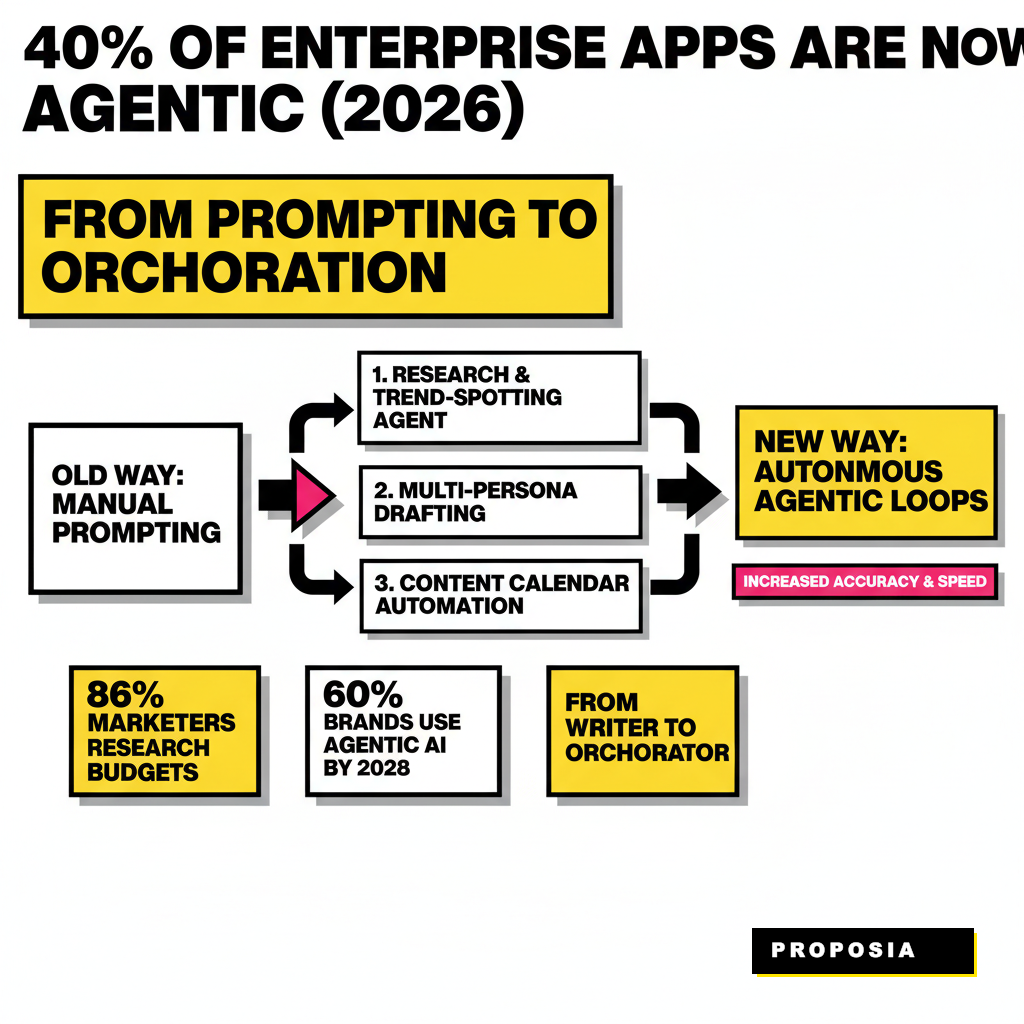
Building these workflows requires a different mental model. You aren't just giving a command; you're defining a role, a set of tools, and a process for self-correction. Proposia users often start with simple task automation, but the real power lies in multi-agent orchestration. By the time you finish your coffee on Monday morning, a well-tuned agentic system can have your entire week of content researched, drafted, and checked for compliance. This isn't science fiction anymore. It is the standard operating procedure for any brand that wants to maintain authority in an AI-saturated market.
Workflow 1: The Research & Trend-Spotting Agent
Most content fails because it's out of date before it's even published. A research agent solves this by continuously monitoring live data sources. Instead of you searching Google Trends, the agent uses tools like the LangGraph framework to crawl industry news, social signals, and competitor updates. It filters out the noise and identifies high-potential topics based on your specific audience's pain points. 86% of marketers in 2026 have increased their research budgets specifically to fund these types of autonomous data-gathering systems.
The agent doesn't just find a link. It extracts key statistics, identifies the primary sentiment, and suggests a unique angle that hasn't been covered a thousand times. You can set it to run every Sunday night. By Monday morning, your dashboard is populated with five fresh content briefs, each backed by real-time data. This eliminates the 'blank page' problem and ensures your calendar is always ahead of the curve. Accuracy is the new currency, and these agents are the mint.
Workflow 2: Multi-Persona Drafting and Narrative Weaving
One AI model writing one draft often sounds generic. Agentic workflows allow you to use a multi-agent team to build a narrative. Think of it as a virtual newsroom. One agent acts as the subject matter expert, providing the technical depth. A second agent acts as the editor, focusing on flow and tone. A third agent plays the 'devil's advocate,' looking for logical gaps or weak arguments. This collaborative approach produces content that feels human because it has been through a rigorous, multi-perspective review process.
Role-Based Drafting (CrewAI)
- Agents have fixed roles (Researcher, Writer).
- Linear task handoffs for speed.
- Ideal for standardized blog posts.
- Lower setup complexity for beginners.
Stateful Orchestration (LangGraph)
- Agents loop back for revisions.
- Conditional logic based on quality scores.
- Best for complex, long-form whitepapers.
- Built-in 'Human-in-the-loop' checkpoints.
This method significantly reduces the need for heavy manual editing. You aren't fixing grammar; you're refining ideas. When you use a framework like CrewAI, the agents talk to each other to clarify points before they even show you the first draft. If the Subject Matter Expert agent provides a technical detail that the Editor agent finds too dense, they resolve it internally. Your role is simply to provide the final 'stamp of approval' before the piece moves to the next stage of the pipeline.
Workflow 3: Automated SEO and Compliance Guardrails
Publishing content without a compliance check is a massive risk in 2026. Regulatory bodies have become stricter about AI-generated claims and data privacy. An agentic workflow can include a dedicated 'Compliance Auditor' that scans every draft against your brand's legal guidelines and current SEO best practices. This agent uses live search to verify that every statistic cited is from a reputable source and that all external links are active and high-authority. It acts as a safety net that never sleeps.
| Audit Category | Agent Action | Success Metric |
|---|---|---|
| Fact Verification | Cross-references claims with 3+ live sources. | Zero unverified statistics. |
| Brand Voice | Checks against 'Anti-AI' detection rules. | Performs as 'Human' in 98% of tests. |
| Legal Compliance | Flags prohibited claims or data risks. | 100% adherence to internal policy. |
Integrating these guardrails early prevents expensive mistakes. For instance, if you're in a regulated industry like finance, you might want to link to our guide on 10 Must-Have Tools for AI Governance and Compliance Audits in 2026 to see how others are handling this. Automating this step ensures that your content is not only engaging but also legally sound and optimized for the latest search algorithms. You can sleep better knowing your AI isn't hallucinating legal advice or using outdated keywords.
Workflow 4: Cross-Channel Repurposing for 2026 Distribution
Writing a blog post is only 20% of the battle. The other 80% is making sure people see it. A distribution agent can take a single long-form article and autonomously generate a dozen different assets. It creates a LinkedIn summary, a thread for X, a script for a short-form video, and a personalized email newsletter. It doesn't just copy-paste; it adapts the tone and format for each platform. In 2026, teams that use AI for repurposing see a 2.4x increase in content ROI compared to those who do it manually.
This workflow saves you the tedious work of reformatting content for different screen sizes and attention spans. By the end of 2026, AI-generated video will account for nearly 40% of all video ads. Your agentic workflow can stay ahead of this by automatically generating video storyboards and scripts from your text assets. This level of efficiency allows a small team to perform like a global agency. You spend your Monday reviewing a full distribution plan instead of struggling to write a single social media caption.
Workflow 5: The Feedback Loop and Performance Optimization
The final workflow is the most critical: the closed-loop feedback system. An optimization agent connects to your analytics platforms to see which posts are actually driving conversions. It analyzes the data and feeds those insights back into the Research Agent for the following week. If posts about 'Agentic Workflows' are getting 50% more engagement than 'Generative UI,' the system automatically adjusts the next month's calendar to prioritize the winning topics. This is how you build a self-improving content engine.
Data silos are the enemy of growth. By automating the connection between performance and planning, you ensure that your content strategy is always grounded in reality. This approach helped one enterprise save millions by identifying and cutting low-performing content categories early. You can read more about that in our case study on Navigating the 2026 AI Audit. When your calendar optimizes itself based on revenue rather than vanity metrics, you've achieved true content automation. Monday morning just got a lot quieter.