The Post-Sora Era: Why the Wait is Over
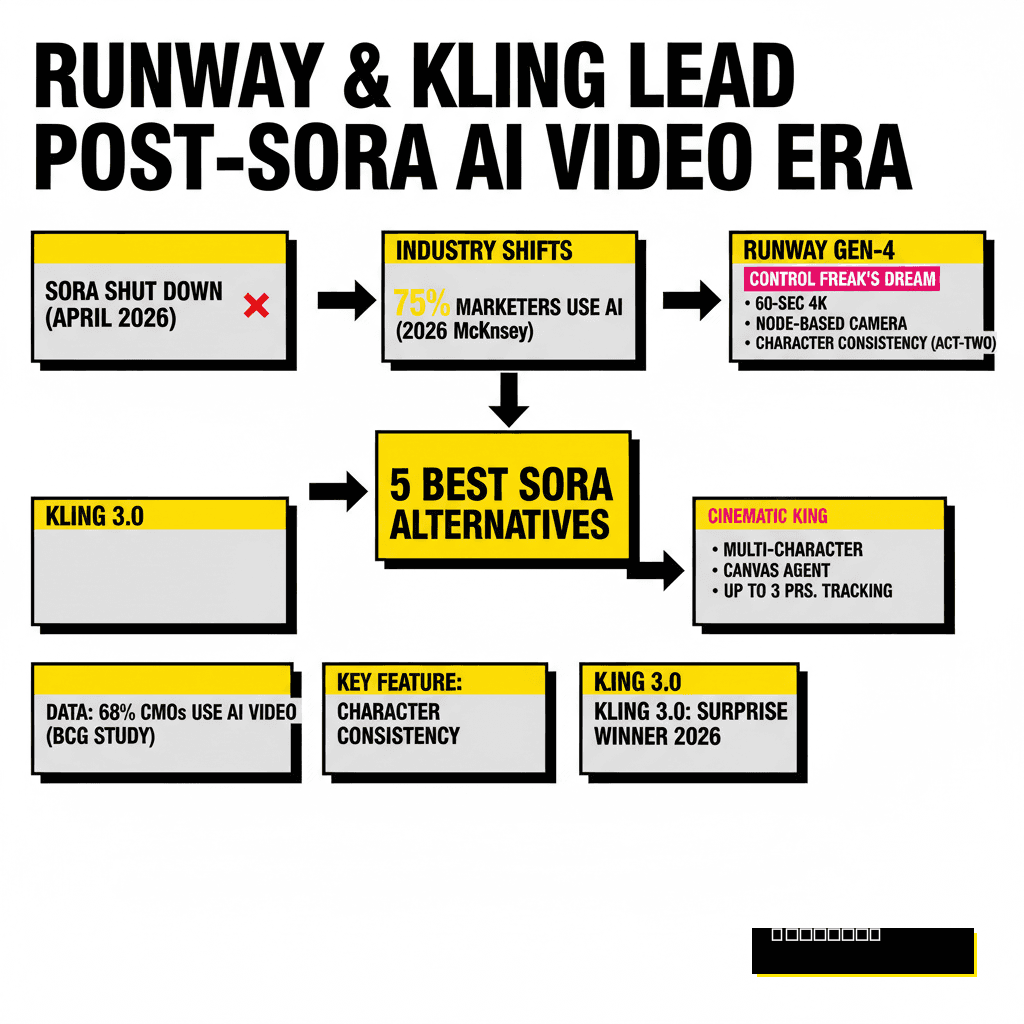
OpenAI officially pulled the plug on the Sora app yesterday, April 26, 2026. If you were one of the thousands of marketers still waiting for a golden ticket to the Sora beta, the news probably felt like a gut punch. But the truth is that the industry moved on months ago. While the Sora brand became a household name, other platforms focused on building tools that actually solve the problems creators face every day, like character consistency and granular camera control.
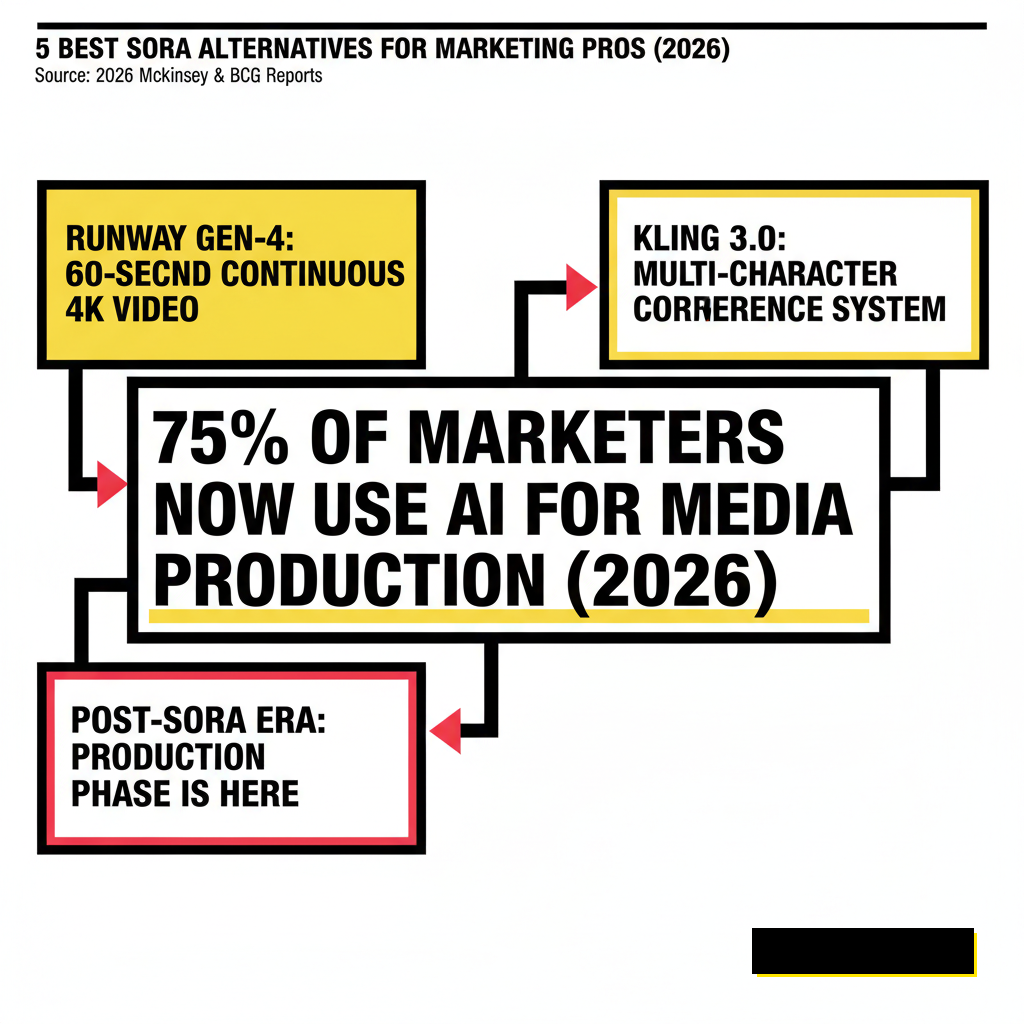
The shift is backed by hard data. According to a 2026 McKinsey report, 75% of marketers now use AI for media production. We are no longer in the experimentation phase. We are in the production phase. If you want to stay competitive, you need tools that are available now, not promised in a future press release. The tools we have today, from Runway Gen-4 to Kling 3.0, are often more capable for specific marketing workflows than Sora ever was in its limited release.
Runway Gen-4: The Control Freak's Dream
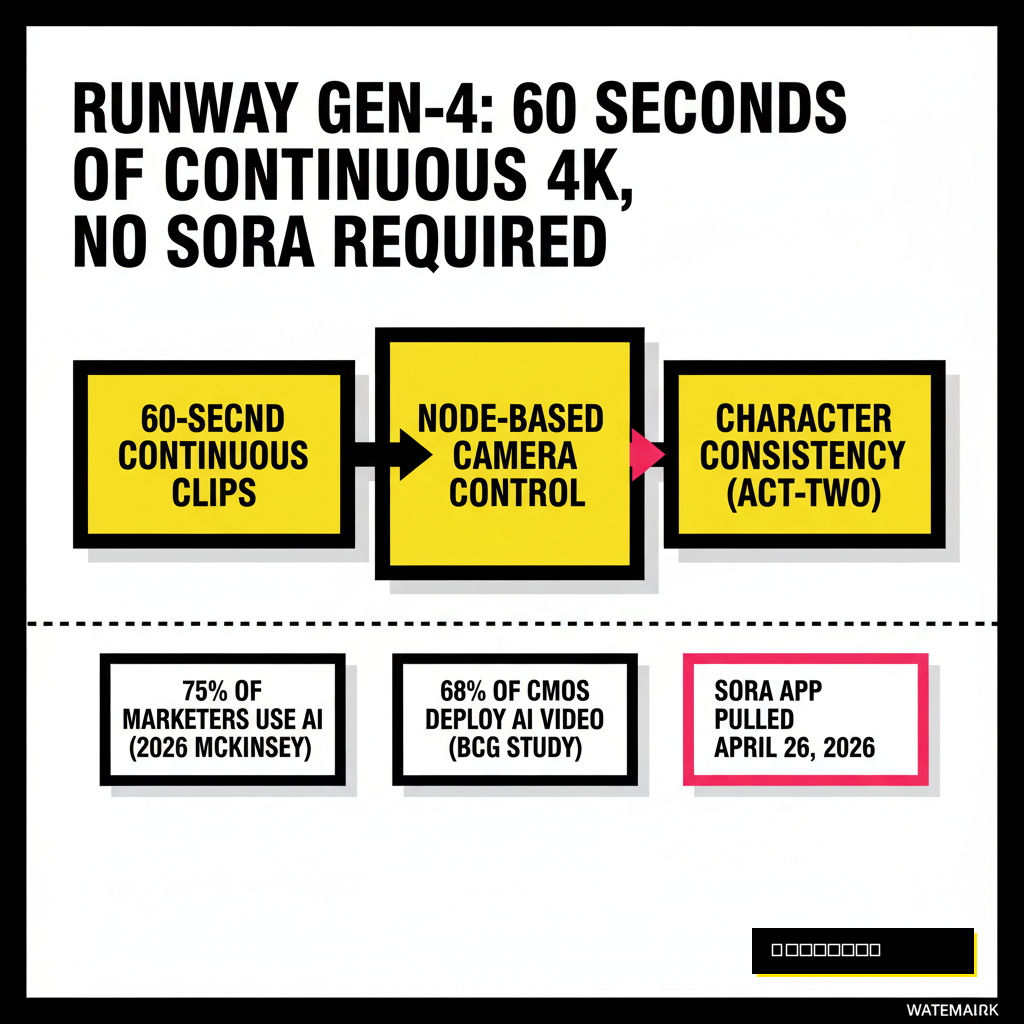
Runway has long been the gold standard for creators who need precision. With the launch of Gen-4 earlier this year, they moved beyond simple prompt-to-video. The platform now operates as a general world model, allowing you to generate 60 seconds of continuous 4K footage. For a brand manager, the most important update is the Act-Two system. This feature lets you maintain a single character's identity across dozens of different shots without the flickering or face-morphing issues that used to haunt AI video.
You can also use Director Mode to script specific camera movements. Instead of hoping the AI gives you a slow zoom, you can use a node-based interface to draw the exact path you want the camera to follow. This level of control is why 68% of CMOs are now deploying AI video tools in their quarterly campaigns, as noted in a recent BCG study. Runway isn't just a generator anymore. It's a full-stack post-production house.
Runway Gen-4
- 60-second continuous clips
- Node-based camera path control
- High-fidelity character consistency (Act-Two)
- Native 4K UHD output
Runway Gen-4.5
- Integrated multi-shot editing
- Native AI audio and dialogue sync
- Real-time physics overrides
- Enterprise-grade API for batching
Kling 3.0: The New King of Cinematic Consistency
Kling AI has been the surprise winner of 2026. Originally gaining fame as a Sora-killer from China, the global version of Kling 3.0 is now the preferred choice for high-end cinematic ads. Its biggest advantage is the Multi-Character Coreference system. This allows the model to track up to three distinct characters in a single scene, ensuring they interact naturally without blending into each other. For narrative-driven marketing, this is a requirement that most other tools still struggle to meet.
Kling also introduced the Canvas Agent, a tool that automates the storyboarding process. You can upload a script, and the agent will generate a sequence of shots that maintain consistent lighting and style across the entire narrative. This efficiency is a massive part of why the AI video market is projected to reach $847 million by the end of this year, according to Fortune Business Insights. When you can produce a 30-second spot in 27 minutes instead of 13 days, the ROI becomes undeniable.
| Feature | Kling 3.0 | Sora 2 (Legacy) |
|---|---|---|
| Max Duration | 15s per clip (3 min extension) | 60s per clip |
| Native Resolution | 4K Ultra HD | 1080p |
| Character Lock | Up to 3 characters | Single subject focus |
| Audio | Integrated SFX and Voice | Silent output |
Luma Dream Machine 2.0: Physics-First Generation
Luma Dream Machine 2.0, powered by the Ray 3 model, takes a different approach. While others focus on control, Luma focuses on physics. The Ray 3 model was trained specifically on 3D volumetric data, meaning it understands how light reflects off a moving car or how cloth drapes over a person's shoulder. In a world where AI search optimization is becoming critical for video discovery, the realism of these physics can affect how algorithms rank your content.
For product marketers, Luma is the clear choice for high-fidelity showcases. It handles reflections and fluid dynamics better than any other model in its class. If you are generating a video for a luxury watch or a new beverage, the way Luma calculates light movement makes the output indistinguishable from a real camera. This level of realism is why 91% of businesses now use video as a primary marketing tool, returning to an all-time high in 2026.
Pika 2.5: The King of Creative Effects
Pika Labs has always leaned into the more artistic side of AI video. Their current version, Pika 2.5, introduced the Pikaffects suite. This allows you to apply surrealist physics to any object in your video. You can make a product inflate and pop, or melt into a puddle, all with a single click. For social media marketing, these high-impact visual hooks are essential for stopping the scroll. As we see more people consuming content via minimalist AI wearables, these short, punchy visual moments become even more valuable.
Pika also includes an integrated sound effects engine. When an action happens on screen, the AI generates the corresponding audio automatically. This removes one of the biggest friction points in the creative process. You no longer have to spend hours hunting for the right sound of a car door slamming or a balloon popping. Pika understands the visual context and provides the audio to match, which is why it remains a favorite for short-form creators on TikTok and Reels.
Building Your 2026 Video Stack
Selecting the right tool depends entirely on your specific goals. You might use Luma for the initial product beauty shots, Runway to build the narrative around a consistent character, and Pika to add the final creative flourishes. The era of the single-tool solution is over. Successful marketing teams in 2026 are building modular workflows that utilize the strengths of each platform. This multi-tool approach is how you achieve the 3.2x ROI that McKinsey reports for high-performing AI content drafting teams.
You should also consider the ethical and legal side of these tools. Most professional platforms like Runway and Luma now offer clear commercial licensing and copyright protection for enterprise users. With the IAB projecting that AI-generated video will account for 40% of all video ads by the end of this year, having a legally sound workflow is just as important as having a high-quality one. The tools are here, the data is clear, and the wait for Sora is officially a thing of the past.