The Sudden Vacuum in the Creator Economy
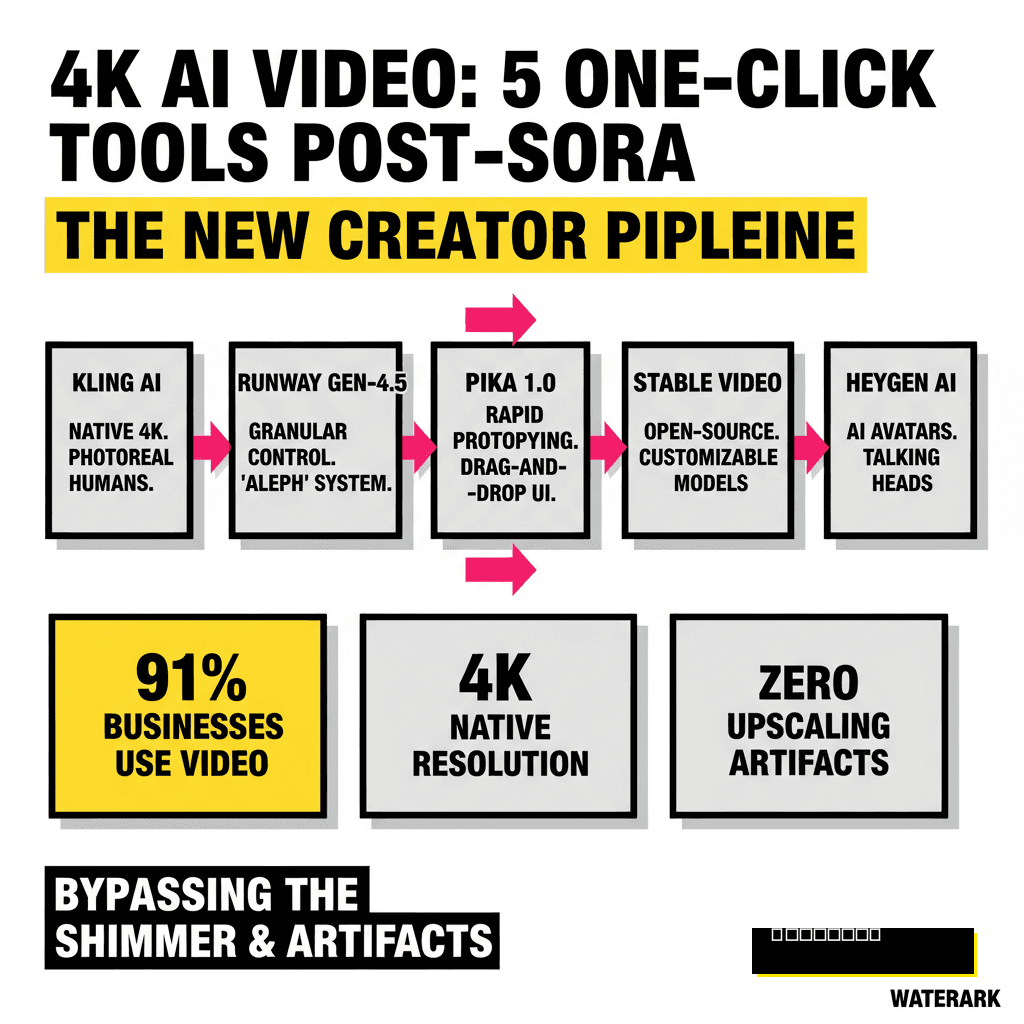
Creators woke up to a different world yesterday. OpenAI officially discontinued the Sora web and app experience on April 26, 2026, pivoting their resources toward the robotics sector. While the industry is still processing that shift, the demand for high-fidelity, viral-ready video has never been higher. According to a 2026 Wyzowl report, 91% of businesses now view video as a non-negotiable marketing tool. If you were relying on Sora to power your 2026 content calendar, you need a new pipeline immediately.
High-resolution output used to require a complex chain of upscalers and post-production plugins. That friction is gone. Today, the best tools generate native 4K pixels directly from the model, bypassing the artifacts and 'shimmer' that used to give AI video away. You're looking for tools that understand physics, maintain character consistency across shots, and export at broadcast quality with a single click. Here are the five platforms setting the pace in this post-Sora era.
1. Kling AI: The New Benchmark for Native 4K
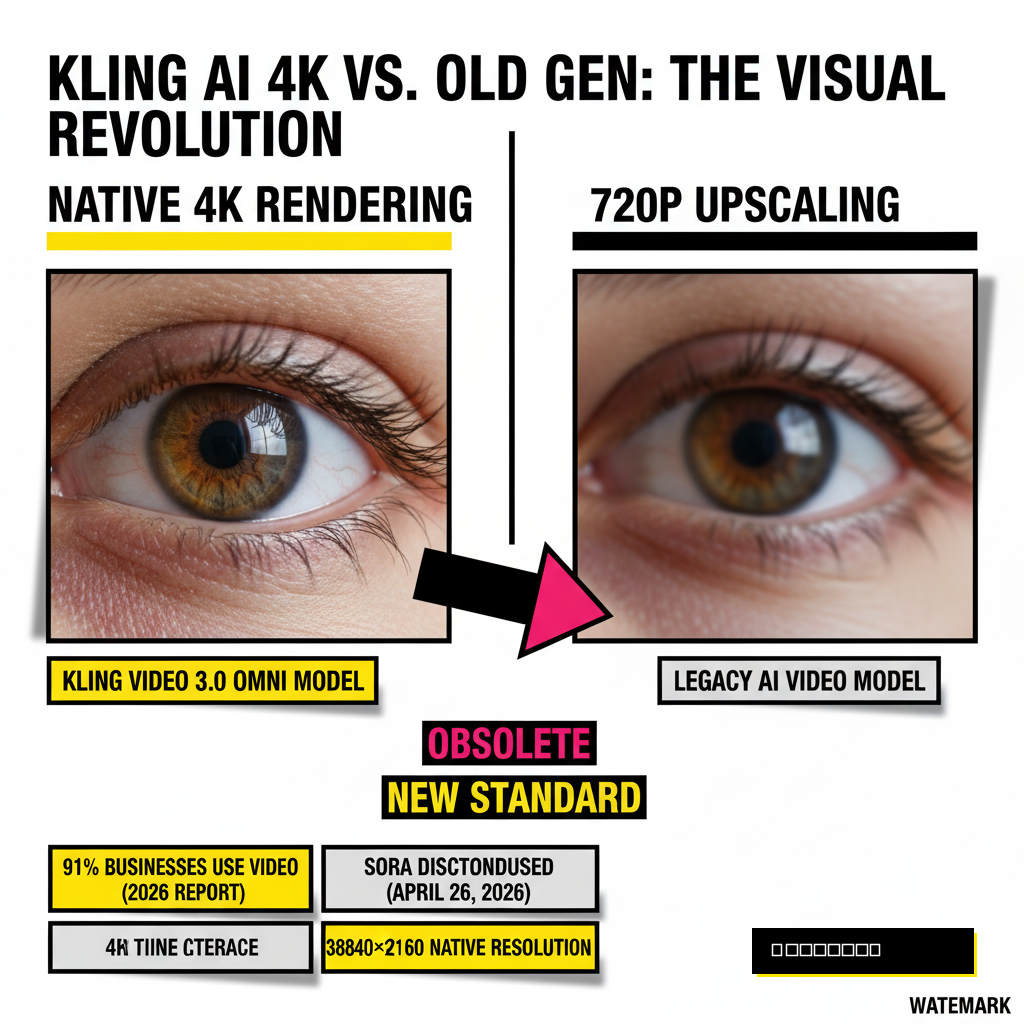
Kling AI just stole the spotlight by launching its native 4K mode on April 23, 2026. This isn't just an upscaling trick. The Kling Video 3.0 Omni model renders 3840×2160 resolution directly in the generation phase. Most competitors still generate at 720p and use a second pass to 'hallucinate' the extra pixels, which often leads to mushy textures in high-motion scenes. Kling's approach keeps skin textures and material surfaces sharp even during complex human movements.
Photorealistic humans are where this tool truly dominates. If your social strategy relies on realistic characters or 'day-in-the-life' content that needs to look authentic, Kling is the obvious choice. The platform also introduced a Storyboard Agent that handles multi-shot sequences, allowing you to maintain a consistent protagonist across several clips without the usual identity drift. For those moving from text-to-video to more advanced workflows, pairing these outputs with 10 GPT-5 Multimodal Prompts for 4K Cinematic Video can help you extract maximum realism from the Kling engine.
Kling Native 4K
- Direct 3840x2160 rendering
- Zero upscaling artifacts
- Superior skin and fabric texture
- 30-second high-motion capacity
Standard AI Video
- 720p/1080p native generation
- Post-process upscaling required
- Occasional 'shimmer' on edges
- Motion distortion at high resolutions
2. Runway Gen-4.5: Professional Precision
Runway remains the industry standard for creators who need granular control. The Gen-4.5 model, released in late 2025, introduced the 'Aleph' system. This feature allows you to edit specific elements within a video using text prompts without regenerating the entire scene. If you love a 4K shot but hate the color of the character's jacket, you can change it in seconds. This level of 'in-video' editing is a massive time-saver for viral content that needs to hit specific brand aesthetics.
Speed is the other major factor here. Runway Gen-4 Turbo generates 10-second clips in roughly 30 seconds, making it about five times faster than the standard high-quality models. This rapid iteration is vital when you're trying to catch a trending audio or news cycle on TikTok or Instagram Reels. The platform's character consistency tool is also remarkably robust, requiring only a single reference image to lock a face across an entire campaign. Industry data shows that teams adopting these tools are seeing dramatic shifts in production efficiency.
3. Luma Dream Machine 2.0: The Cinematic Workhorse
Luma Labs pivoted from 3D capture to video with incredible success. Their Dream Machine 2.0, powered by the Ray 3 model, understands 3D space better than almost any other generator. When the camera pans or orbits a subject in Luma, the background parallax and perspective shifts are physically accurate. This prevents the 'warping' effect often seen in earlier AI models where buildings or trees would stretch unnaturally during camera movement.
One-click 4K is available for enterprise users, while standard creators get crisp 1080p with an optional high-bitrate export. Luma's interface is arguably the most approachable for beginners. You don't need a degree in prompt engineering to get a usable result. The 'Modify' tool is particularly impressive, allowing you to extend clips by 5-second increments to build longer narrative threads. Following a structured workflow helps maintain the visual quality through these extensions.
4. Pika 2.5: The Creative VFX Powerhouse
Pika 2.5 is the tool for creators who want to push the boundaries of reality. While Kling and Runway focus on realism, Pika leans into physics-based effects. Their 'Pikaffects' suite allows you to melt, crush, or inflate objects within your video with a single click. These surreal visuals are perfect for high-engagement social media hooks that stop the scroll.
Sound is the newest frontier for Pika. The platform now generates integrated sound effects that automatically sync with the visual action. If an object shatters in your 4K render, Pika produces the corresponding audio without you needing to hunt for samples. This 'all-in-one' approach makes it the fastest way to go from an idea to a fully produced social post. The temporal consistency has also seen a massive upgrade in the 2.5 engine, virtually eliminating the flickering issues that used to plague stylized AI animation.
| Feature | Kling AI | Runway Gen-4.5 | Pika 2.5 |
|---|---|---|---|
| Native 4K | Yes (v3.0) | Upscaled 4K | 1080p Native |
| Physics Engine | High Realism | Cinematic Standard | Surrealist VFX |
| Audio Sync | Voice Control | Limited | Auto SFX |
| Best For | Human Realism | Pro Editing | Social Hooks |
5. Google Veo 3: The Native Audio King
Google Veo 3 remains the best-kept secret for high-end creators. While it's tucked behind the Google AI Pro subscription, its ability to generate cinematic realism with native audio is unmatched. Veo 3.1, rolled out in late 2025, focus on 'broadcast consistency.' This means the lighting and color grading look like they came from a professional cinema camera rather than a digital generator.
Integration with the broader Google ecosystem is the real advantage. You can pull assets from your Drive, animate them in Veo, and then use the built-in AI tools to optimize your metadata for YouTube. As search behaviors shift, these videos are also becoming critical for discovery. Understanding 8 AEO Tactics to Rank #1 in Perplexity and SearchGPT will help ensure that your high-quality AI videos actually reach your target audience in an increasingly AI-filtered web.
The Future of One-Click Virality
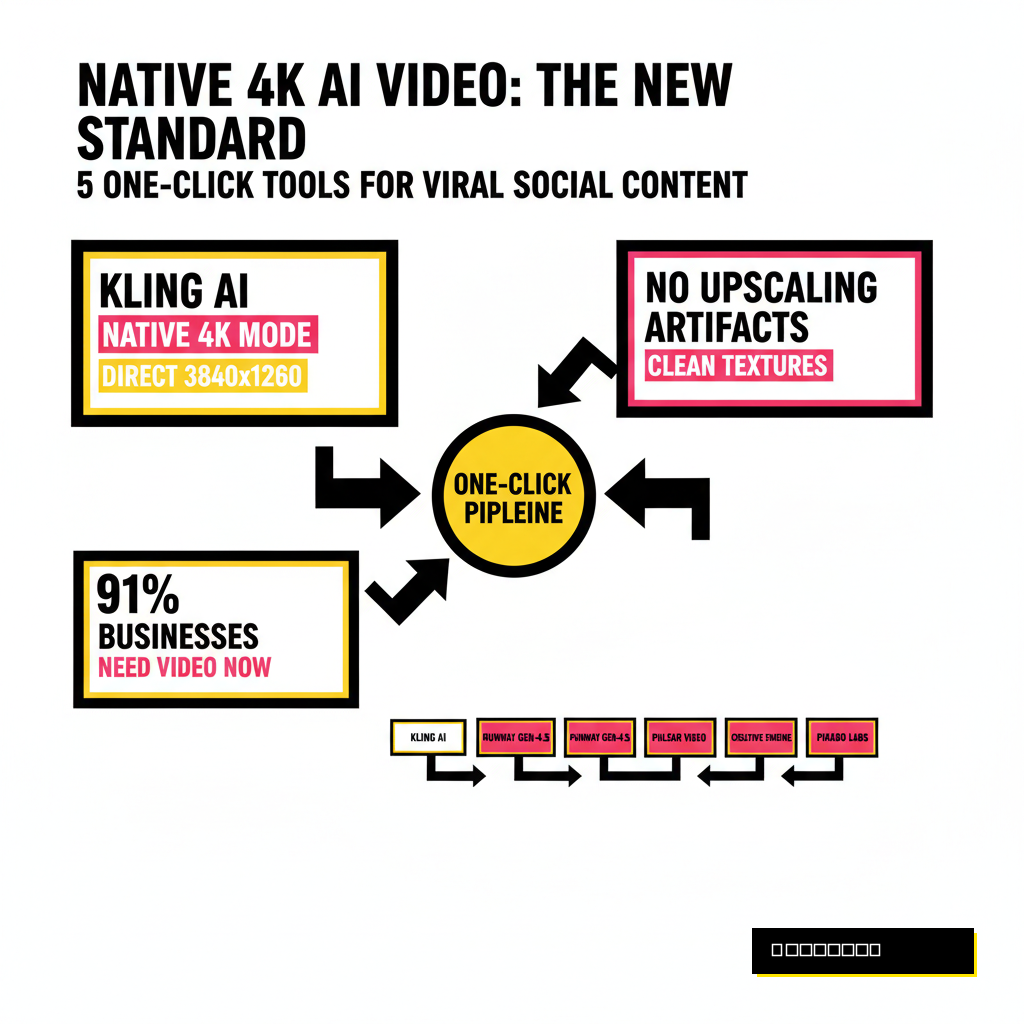
The sudden departure of Sora from the consumer market is a reminder that the AI landscape moves faster than any individual platform. Creators who succeed in 2026 aren't the ones who master a single tool, but the ones who understand how to pivot between them. Whether you're chasing the photorealism of Kling or the creative chaos of Pika, the barrier between a text prompt and a viral 4K masterpiece is officially gone.
Success now depends on your creative vision and your distribution strategy. High-resolution video is the new baseline. To stand out, you need to combine these one-click tools with a deep understanding of how AI search engines and social algorithms prioritize video content. The tools are ready. The audience is waiting. It's time to start rendering.