The Shift Toward Generative Landing Pages
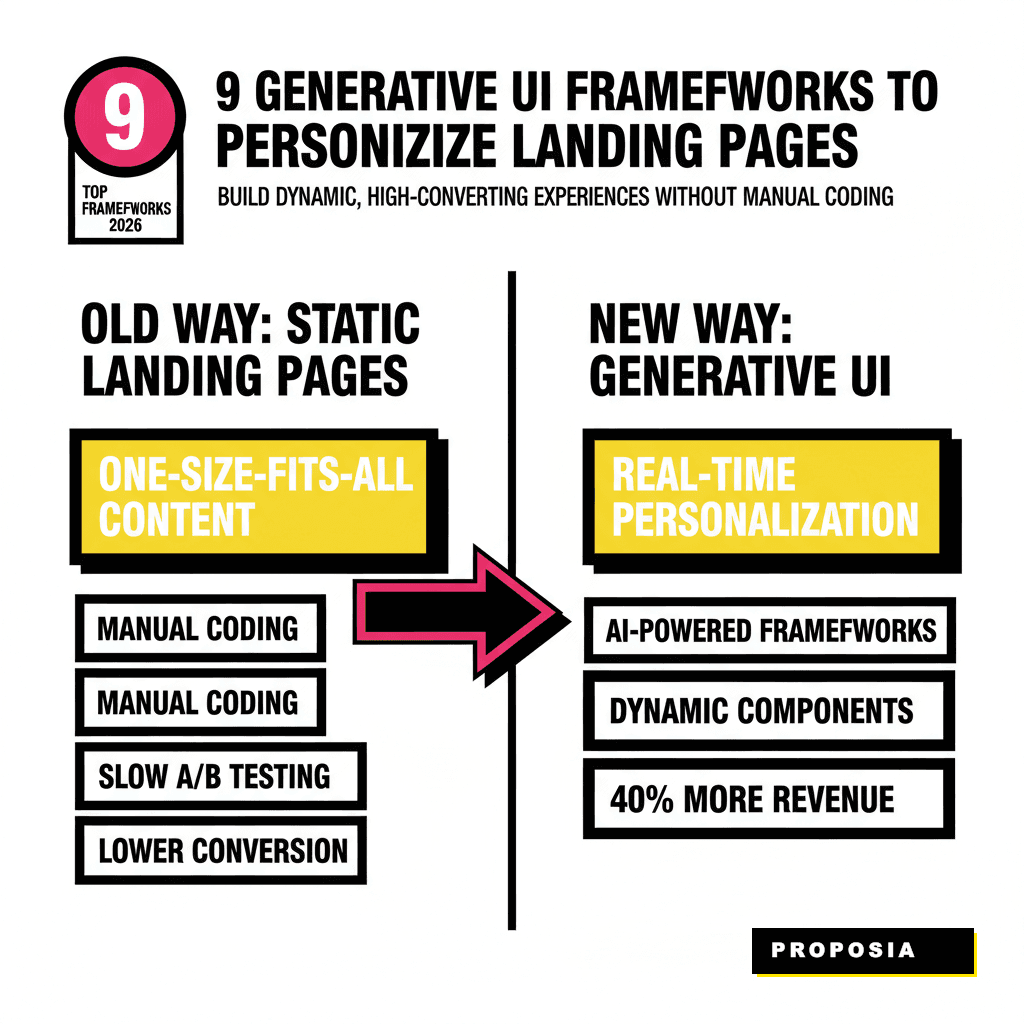
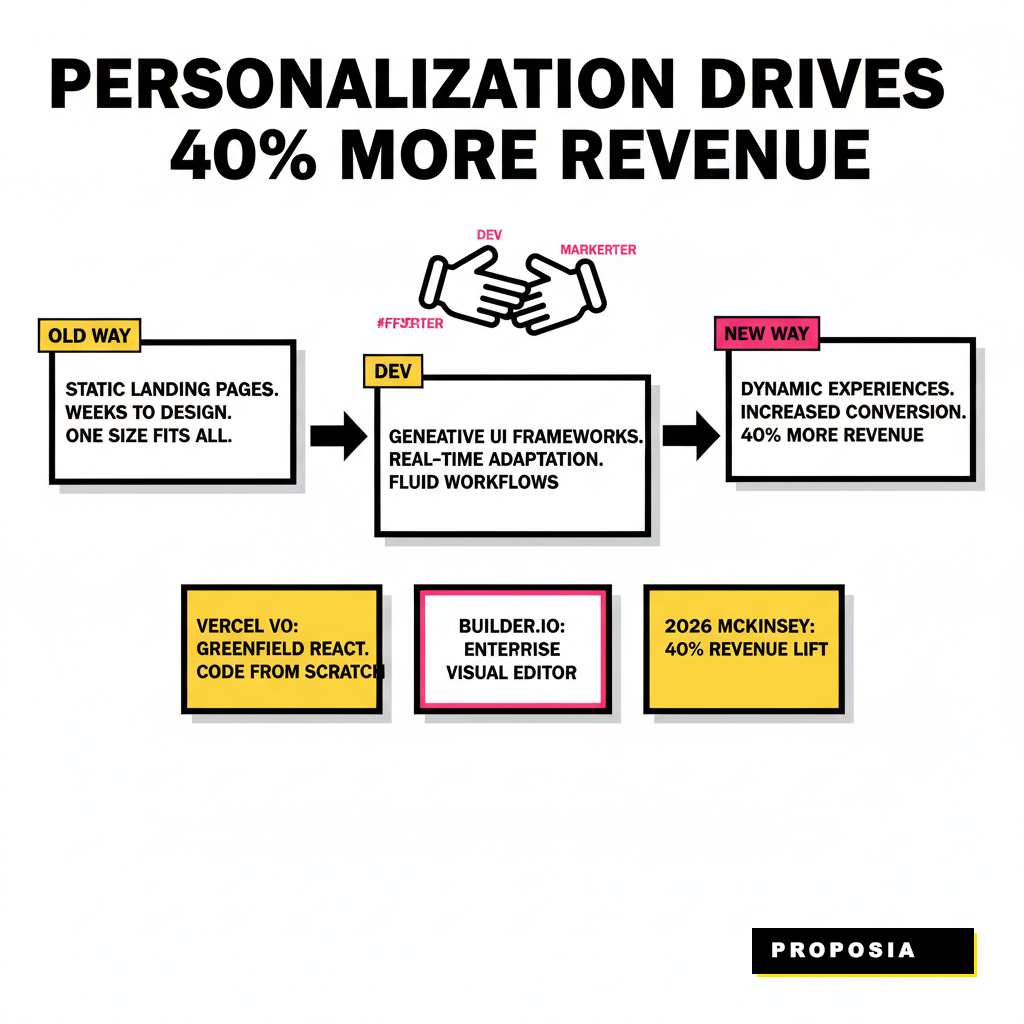
Landing pages used to be static assets that stayed the same for every visitor. You would spend weeks designing a single version, hoping it resonated with everyone from a first-time browser to a loyal customer. Right now, that approach is failing. Static content cannot compete with the speed of modern user expectations. Personalization has moved beyond simply swapping a first name in an email header. It now involves rebuilding the entire user interface in real-time based on visitor behavior, intent, and historical data.
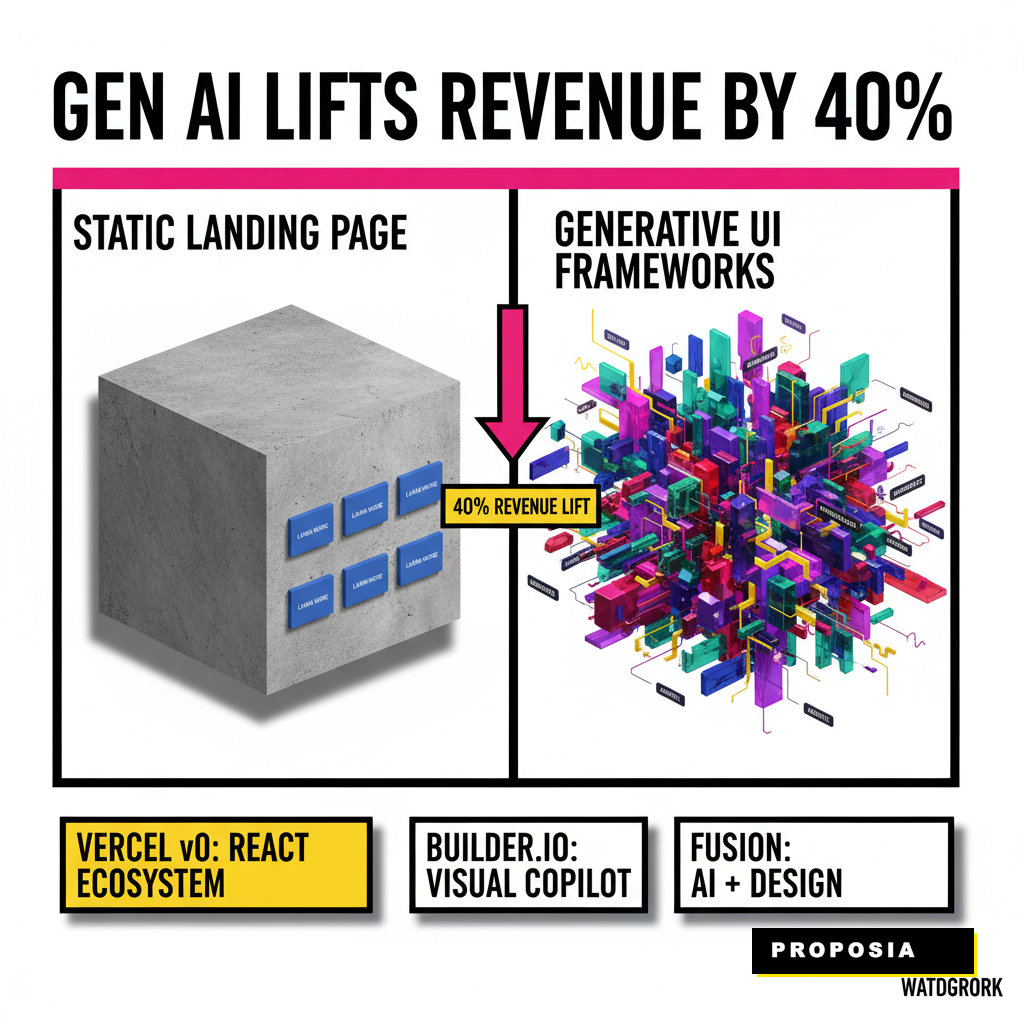
Frameworks that use generative artificial intelligence are making this shift possible. These tools allow teams to create unique components on the fly rather than relying on a library of pre-built templates. According to a 2026 McKinsey report, companies that excel at personalization generate 40% more revenue from those activities compared to their slower-moving peers. Success in this new era requires a move away from rigid design systems and toward fluid, agentic workflows.
The Heavy Hitters: Vercel v0 and Builder.io
Vercel v0 has quickly become the standard for developers working within the React ecosystem. Users can describe a component in plain English and receive production-ready code using Tailwind CSS and shadcn/ui. Guillermo Rauch, the CEO of Vercel, noted in a 2025 talk that the future of developer experience is focused on shipping more, not necessarily coding less. This platform recently expanded to include full-stack application building, allowing for data-driven personalization that connects directly to enterprise databases like Snowflake or AWS.
Builder.io takes a different route with its Visual Copilot 2.0. Instead of just generating new code, it acts as an intelligent layer over your existing codebase. Designers can import Figma files directly, and the AI matches those designs to the actual components already living in your repository. This ensures that any personalized variation remains consistent with your brand guidelines. Large organizations use this to create A/B test variations in minutes, drastically reducing the time spent in the design-to-dev handoff.
Vercel v0
- Best for greenfield React projects
- Generates clean, modular code from scratch
- Deeply integrated with Next.js and Vercel hosting
Builder.io
- Best for existing enterprise codebases
- Matches designs to your specific component library
- Built-in visual editor for non-technical teams
Design-First Personalization: Framer and Relume
Framer AI focuses on the visual and emotional side of the web. It uses a text-to-site engine that generates entire pages complete with high-fidelity animations and responsive layouts. Returning visitors can be greeted with unique visual styles or content hierarchies that adapt to their previous interactions. The platform has evolved into an AI-first website builder where the distance between an idea and a live production site is measured in minutes. This makes it a favorite for marketing teams that need to launch high-impact campaigns without waiting on a development sprint.
Relume AI approaches personalization through the lens of conversion psychology. It starts with an AI-generated sitemap based on your business goals and then populates those structures with wireframes from a library of over 1,000 proven components. These components are designed to follow established user behavior patterns, ensuring that the personalized layouts are not just unique, but effective. Teams can export these structures directly to Figma or Webflow, bridging the gap between strategic planning and visual execution.
| Framework | Primary Strength | Personalization Method |
|---|---|---|
| Framer AI | High-fidelity motion and design | Real-time layout and content adaptation |
| Relume AI | Conversion-optimized wireframing | Component selection based on user goals |
| Locofy.ai | Design-to-code automation | Turning personalized Figma designs into React/Vue |
| Plasmic | Headless visual development | Dynamic content slots and A/B variants |
The No-Code Evolution: Wix Studio and Elementor
Wix Studio recently introduced its Harmony tool, representing a significant shift in how beginners build for the web. It uses a hybrid approach called vibe coding, where users describe the feeling and function of a site, and the AI generates a cohesive visual system. This includes automated responsive logic that ensures the site looks perfect on every device without manual adjustments. Small business owners can now launch personalized storefronts that offer different product recommendations and layouts based on the visitor's location and browsing history.
Elementor has entered the agentic AI space with Angie, a WordPress-native assistant. Angie goes beyond simple text generation by creating custom widgets and entire page sections that fit the specific theme of a site. Recent data from Elementor shows that the top 10% of landing pages are now hitting an 11.45% conversion rate by utilizing these types of advanced optimization agents. These platforms make high-level personalization accessible to those who may not have the budget for a full development team. 89% of marketers currently report a positive return on investment from these personalization efforts.
Technical Implementation and Data Flows
Implementing a generative UI strategy requires a clear understanding of how data flows from the user to the AI model and back to the browser. Most modern teams use an Edge-Trim approach. This involves processing the personalization logic at the network edge to ensure there is no lag in page load times. You must also consider the infrastructure costs associated with these dynamic requests. Our analysis of the 2026 Compute Crunch provides a detailed roadmap for predicting your AI spend as your traffic scales.
Developers are also looking toward Shadcn/ui and its new Scaffold Primitives. These are unstyled, logic-heavy components that an AI agent can stitch together in real-time. Because the code is owned by the developer rather than hidden in a library, it offers total control over the final output. This modularity is essential for building hyper-personalized experiences that feel native to an application's design system rather than like a generic AI-generated template. Managing these complex data flows is the next major challenge for frontend engineers.
Privacy, Ethics, and the 2026 Audit
Data privacy has become a central part of the conversation as landing pages become more intelligent. Storing user behavior to generate custom interfaces requires strict compliance with global regulations. Many enterprises are now facing the 2026 AI Audit, a rigorous review of how models use personal data. Failing this audit can lead to massive fines and a loss of consumer trust. One Fortune 500 company recently saved $8M by proactively navigating the 2026 AI Audit with a clear data governance strategy.
Human oversight remains the most important factor in this process. AI can generate thousands of variations, but it lacks the cultural context and emotional intelligence to know which one will truly resonate. Designers are evolving into product engineers who orchestrate these tools rather than just pushing pixels. They define the strategy and the creative brief while the AI handles the repetitive execution. This partnership is the only way to build landing pages that are both highly efficient and authentically human.