The Day the Music Changed
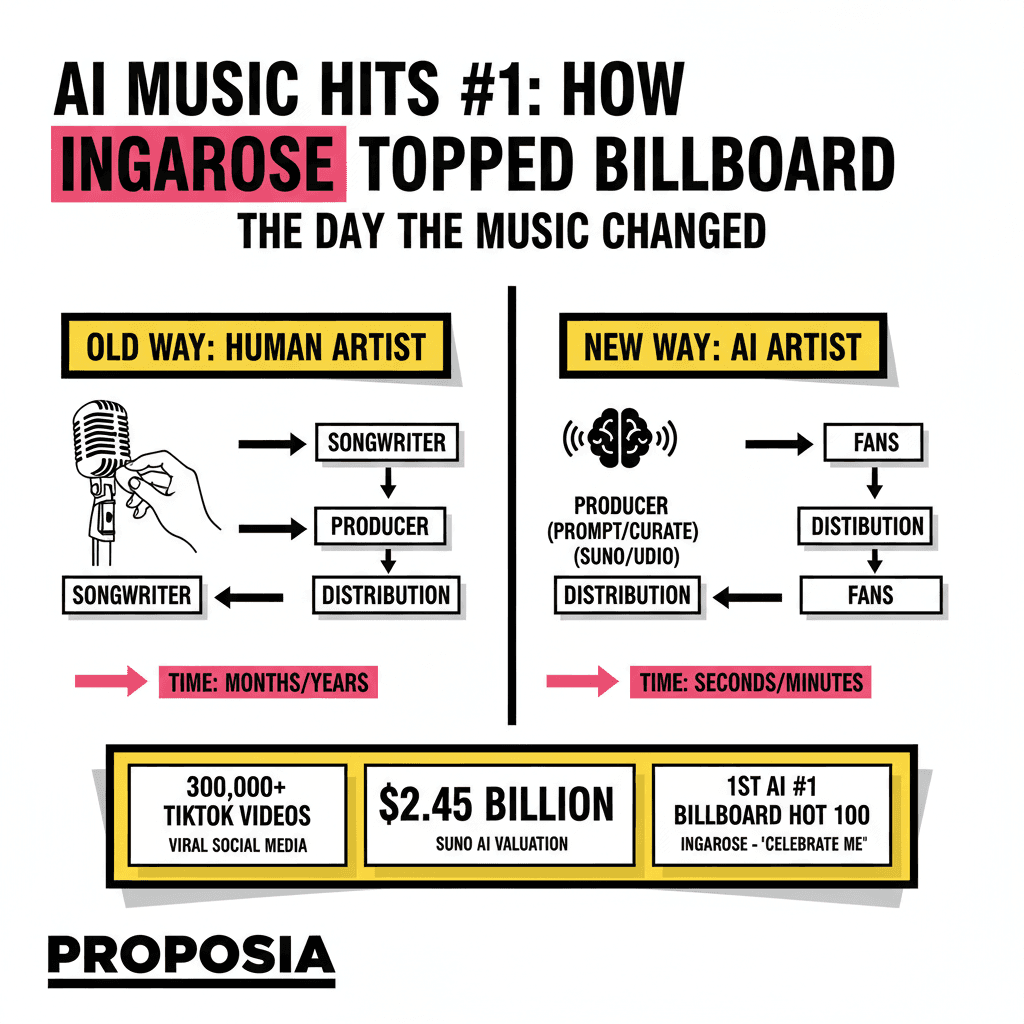
History was made this week when IngaRose's viral single, "Celebrate Me," officially claimed the top spot on the Billboard Hot 100. Most listeners streaming the track on Spotify or using the sound in their TikTok videos had no idea the artist behind the soulful vocals does not actually exist. IngaRose is a completely synthetic persona, the brainchild of a South Carolina producer using advanced generative audio models. While we have seen AI experiments like "Heart on My Sleeve" rattle the industry before, this marks the first time a fully machine-generated song has outpaced every human artist in the country.
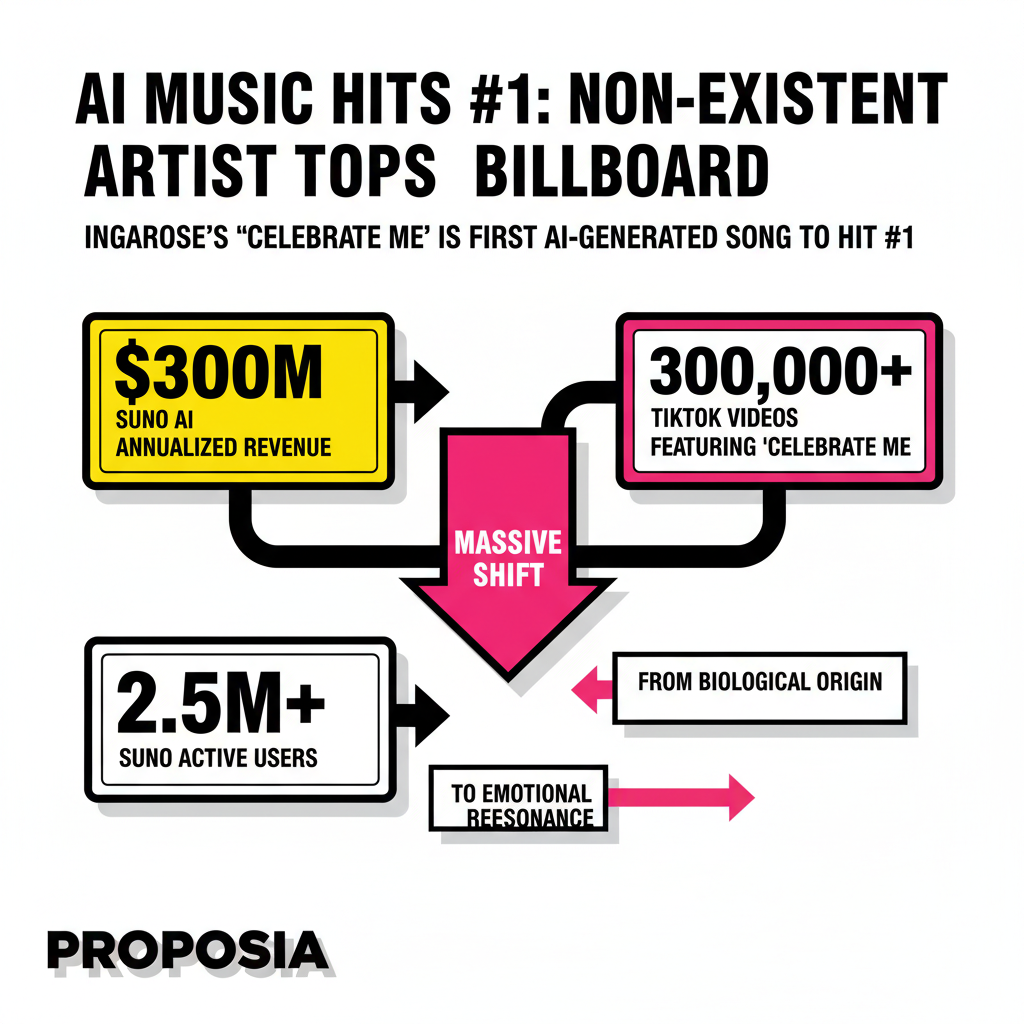
Success for "Celebrate Me" began on social media, where the track appeared in over 300,000 videos within weeks. According to reports from April 2026, the song first dominated the global iTunes charts before its streaming numbers exploded. Such a rapid ascent highlights a massive shift in how audiences discover and consume art. Listeners seem less concerned with the biological origin of a voice than with the emotional resonance of the melody.
The Tech Powering the Hit Machine
Generative platforms like Suno and Udio have evolved from novelty tools into high-fidelity production engines. Suno, recently valued at $2.45 billion, now supports over 2.5 million active users who generate millions of tracks daily. These systems use diffusion models and transformer architectures to predict audio waveforms based on text prompts. A producer can specify "outlaw country with a guttural drawl" and receive a radio-ready file in seconds. We saw a precursor to this in late 2025 when the AI country act Breaking Rust hit #1 on Billboard's Country Digital Song Sales chart with "Walk My Walk."
Proposia users often ask if these tools replace the need for technical skill. While the AI handles the heavy lifting of arrangement and vocal synthesis, the human element has moved to the prompt and the curation. Success requires a deep understanding of viral hooks and audience psychology. Modern creators are essentially becoming creative directors of their own AI labels. If you are interested in how other hardware is catching up to this software boom, check out our analysis of the latest AI wearables hitting the market.
Legal Settlements and the New Music Economy
Major record labels have spent the last two years oscillating between litigation and partnership. Sony Music continues to pursue copyright infringement claims, but others have chosen to adapt. Warner Music recently settled with Suno to launch licensed models that use artist data with permission and compensation. These agreements allow legacy stars to "license" their digital twins for a fee, creating a passive income stream while fans get official AI-assisted content. This transition mirrors the early days of Napster, where a disruptive technology eventually became the foundation of the modern streaming ecosystem.
Creators must navigate a complex landscape of rights and ethics. A 2025 BPI survey revealed that 80% of respondents still value human-made music more than AI-generated tracks, even if they enjoy the latter. Transparency remains the biggest hurdle for the industry. Many platforms now mandate AI disclosure labels, yet viral success often comes from the mystery of a new "artist" appearing out of nowhere. Our recent piece on why Gen Alpha prefers voice AI explores how the younger generation finds and interacts with this new wave of content.
Breaking Down the Viral Pipeline
Achieving a #1 hit with a non-existent artist requires more than just a good prompt. It involves a multi-stage process of generation, social seeding, and chart manipulation. The IngaRose project utilized a specialized workflow to ensure the track felt authentic enough to pass the "Turing test" of the average listener. Here is how that process typically functions in the current market.
What This Means for Independent Creators
Barriers to entry have effectively vanished. A musician no longer needs a $2,000 microphone or a professional studio to produce a chart-topping vocal. However, the sheer volume of content is making discoverability nearly impossible for those without a marketing strategy. Data from Deezer indicates that over 20,000 fully AI-generated tracks are uploaded daily, representing nearly 18% of all new submissions. Standing out requires a unique brand narrative, even if that brand is entirely digital.
Traditional gatekeepers are losing their grip on the charts. Record labels once controlled the distribution and promotion necessary to hit the Hot 100, but IngaRose proved that a solo producer with a laptop can bypass the system. As we look toward the rest of 2026, the question is no longer whether AI can make music, but how human artists will redefine their value in a world where the machines have already won the first round. Musicians who embrace these tools as collaborators, rather than competitors, will likely be the ones who survive the next decade of disruption.
Sourcing Log
- Statistic: IngaRose "Celebrate Me" #1 on iTunes Global - Forbes (April 17, 2026)
- Statistic: Breaking Rust "Walk My Walk" #1 on Billboard Country Digital Sales - Dallas Express (Nov 15, 2025)
- Statistic: Suno AI $300M revenue and 2M paid subscribers - Forbes (Feb 26, 2026)
- Fact: Warner Music settlement with Suno - Forbes (Feb 26, 2026)
- Statistic: AI music projected to account for 20% of streaming revenue by 2028 - CISAC Study via Medium (Dec 2, 2025)
- Statistic: 18% of Deezer uploads are fully AI-generated - Deezer Data via Medium (Dec 2, 2025)