The 45,000 Hour Breakthrough in Banking Compliance
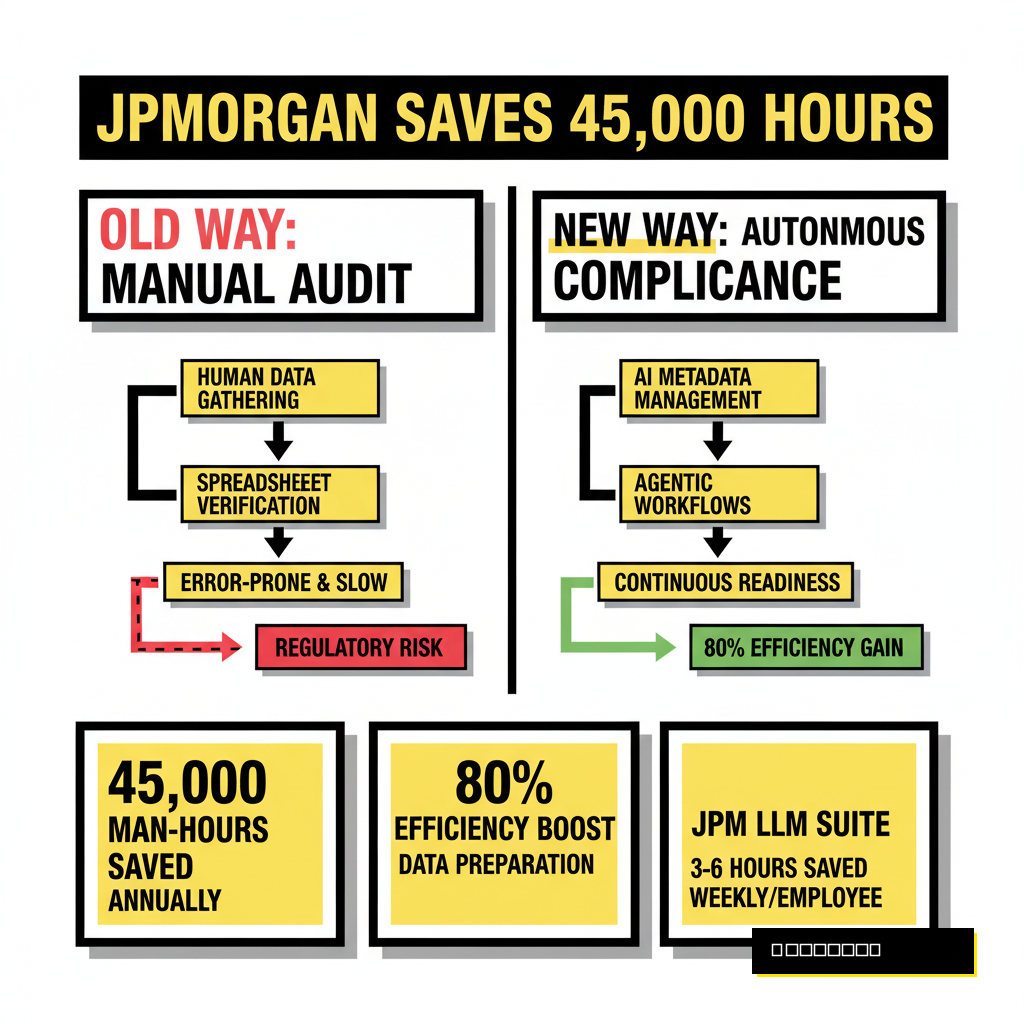
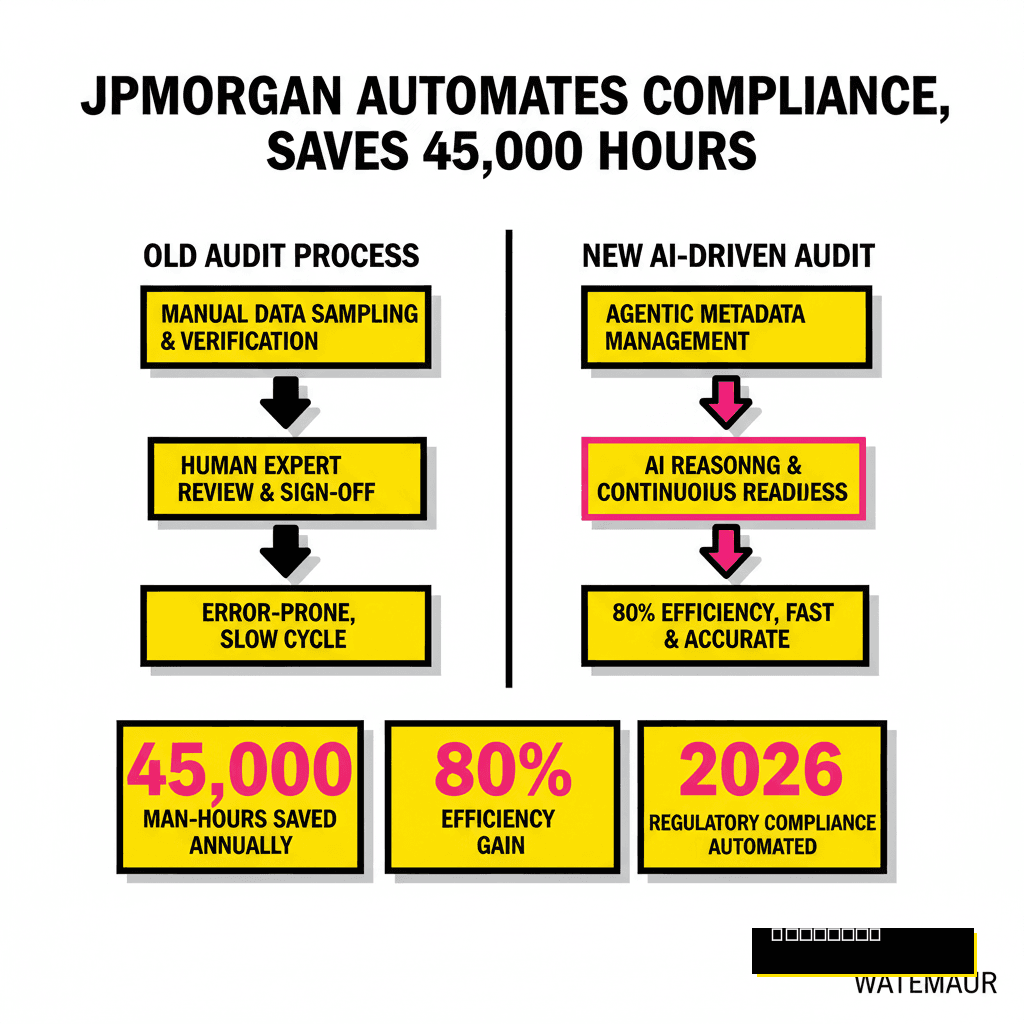
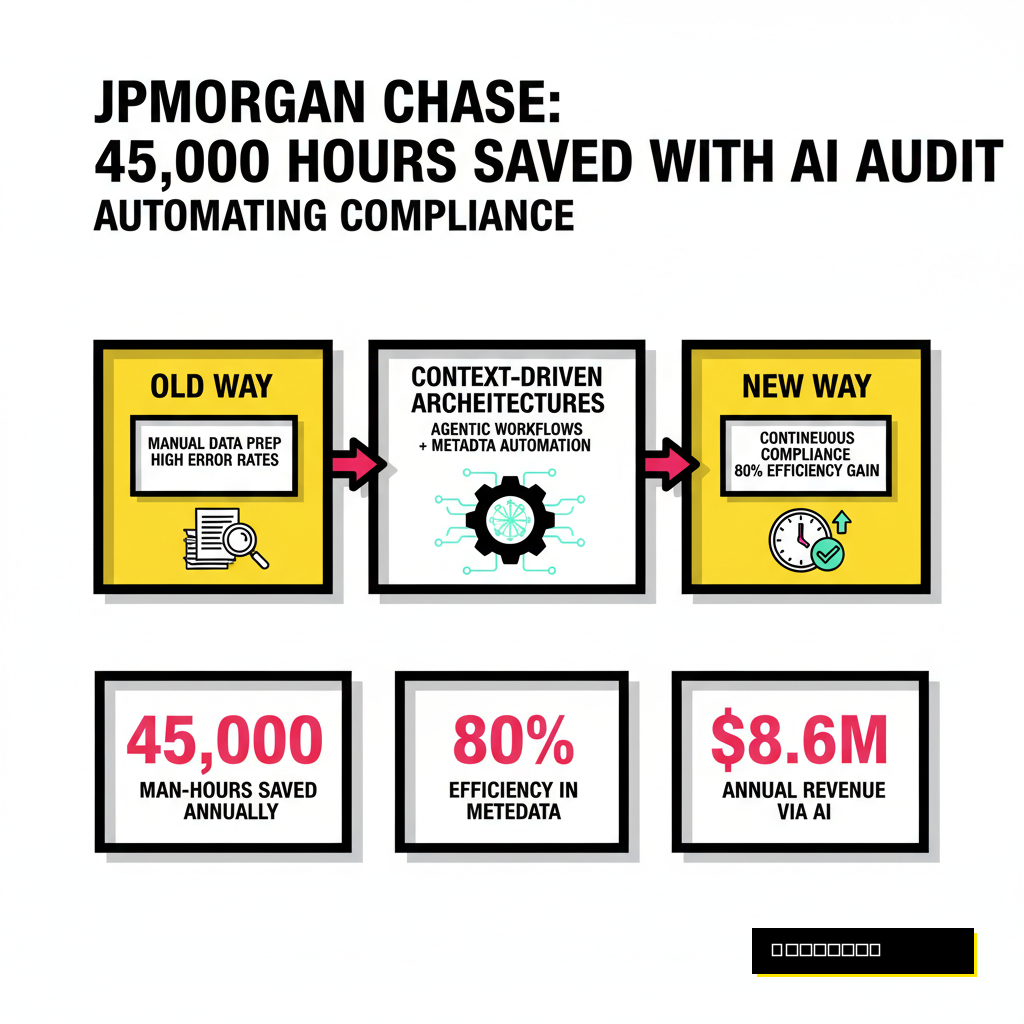
Regulatory pressure reached a boiling point by early 2026. Between the final implementation of Basel III Endgame and the strict enforcement of the Digital Operational Resilience Act (DORA), tier-one financial institutions found themselves buried under a mountain of reporting requirements. For most, the response was to hire more contractors. JPMorgan Chase took a different path. By focusing on automated metadata management and agentic workflows, the bank managed to reclaim 45,000 man-hours that were previously lost to manual audit tasks.
This achievement did not happen by accident. It was the result of a multi-year shift toward what the bank calls context-driven architectures. Instead of simple bots, they deployed intelligent agents capable of reasoning over complex data lineages. This allowed the compliance team to move from reactive firefighting to a state of continuous readiness. You can see a similar shift in the broader market as we discussed in our analysis of the Microsoft vs. Google: 2026 Enterprise Agentic Battle.
Why Manual Audits Failed the 2026 Stress Test
Traditional auditing processes rely on human experts to sample data, verify signatures, and cross-reference spreadsheets. In the past, this was manageable. However, the 2026 regulatory environment introduced high-frequency reporting cycles that made manual sampling obsolete. Errors were not just likely; they were inevitable. The cost of these mistakes was not just financial. Regulators began auditing the AI models themselves, demanding absolute transparency in how decisions were made.
JPMorgan identified that the bottleneck was not the analysis itself, but the preparation of data. Engineers were spending months on metadata changes to ensure GDPR compliance across legacy systems. By automating these updates, the bank achieved an 80% efficiency improvement in data preparation. This freed up senior auditors to focus on high-risk anomalies rather than hunting for broken data links in an Excel file. According to a 2026 JPMorgan Chase report, their internal LLM Suite now saves employees between three and six hours per week on average.
The Architecture of an AI-Driven Audit
Building a system that saves 45,000 hours requires more than just a chatbot. It requires a fundamental rewrite of the data pipeline. JPMorgan utilized a blue-green deployment strategy to modernize its infrastructure without disrupting daily operations. This allowed them to implement real-time fraud detection and automated compliance checks directly into the flow of transactions. Instead of waiting for a quarterly review, the system flags potential violations the millisecond they occur.
Context-rich applications are the secret here. These systems do not just see a transaction; they see the vendor history, the approval chain, and the specific regulatory framework that applies to that geographic region. This level of detail is exactly what is required for modern multi-language audits in global banking. When an agent can reason through these variables, it eliminates the need for human intervention in 90% of routine cases.
Operational Resilience and the 2026 Regulatory Landscape
The Digital Operational Resilience Act (DORA) changed the stakes for European and global banks. It mandated that financial entities must be able to withstand, respond to, and recover from all types of ICT-related disruptions. For JPMorgan, this meant their audit automation had to be as resilient as the core banking systems themselves. They achieved this by embedding responsible machine learning checkpoints across every stage of the pipeline. These checkpoints act as a digital safety net, ensuring that the AI does not hallucinate or drift over time.
Another major hurdle was the Basel III Endgame, which required more granular risk-weighted asset calculations. Human auditors often struggle with the sheer volume of data points required for these reports. AI agents, however, thrive in this environment. They can analyze millions of data points across diverse portfolios in minutes, a task that would take a human team months to complete. This transition from static rules to dynamic AI is what allowed the bank to stay ahead of the curve.
Legacy Audit Method
- Manual data sampling and verification
- Quarterly or annual reporting cycles
- High risk of human error and fatigue
- Reactive response to regulatory changes
AI-Agentic Audit
- 100% data coverage in real-time
- Continuous, automated reporting streams
- Explainable AI with auditable decision trails
- Proactive adaptation via context-rich models
The Human Factor: Upskilling for an Agentic Future
Reclaiming 45,000 hours does not mean the compliance team is smaller. It means the team is more effective. JPMorgan invested heavily in training its staff to work alongside these new systems. Auditors are no longer data entry specialists; they are now AI orchestrators. They define the parameters, review the edge cases, and ensure the technology aligns with the bank's ethical standards. This human-in-the-loop approach is vital for maintaining trust with both regulators and the public.
The bank's 2026 tech trends report highlights this shift toward intent-based interfaces. Instead of switching between dozens of apps to verify a single transaction, auditors now interact with a single, AI-native environment. This paradigm collapse allows for a more intuitive workflow where the system anticipates the auditor's needs. As we see in JPMorgan's internal updates, the goal is to make AI an everyday utility for every employee.
| Regulation | Key Requirement | Automation Impact |
|---|---|---|
| DORA | ICT Risk Management | Real-time resilience monitoring |
| Basel IV | RWA Granularity | Automated data extraction & calculation |
| EU AI Act | Model Explainability | Self-documenting audit trails |
| GDPR | Data Lineage | Automated metadata tagging |
The ROI of Trust and Transparency
Ultimately, the value of automating the audit is not just about saving time. It is about building a more resilient and transparent financial system. When a bank can prove to a regulator that its decisions are based on accurate, real-time data, the risk premium drops. Trust becomes a measurable asset. JPMorgan's ability to save 45,000 hours on these tasks is a signal to the market that they are ready for whatever the next regulatory cycle brings.
Other institutions are now looking to this case study as a blueprint for their own digital transformations. The transition is not easy, but the results speak for themselves. By focusing on data quality, agentic workflows, and human-AI collaboration, any large enterprise can turn a compliance burden into a competitive advantage. The future of the audit is not manual; it is intelligent, continuous, and fully automated.