The End of the 'Ctrl+F' Era
It’s April 20, 2026. If you’re a university student, you’re likely staring at a mountain of PDFs, lecture transcripts, and messy Obsidian notes. The old way of studying—endless highlighting and frantic keyword searches—is officially obsolete. In the age of Proposia and pervasive AI, the most successful students aren't just using AI; they are building it. Specifically, they are building Retrieval-Augmented Generation (RAG) systems.
Think of a standard AI like a genius who has read every book in the world but has a slightly fuzzy memory of your specific professor's niche lecture on 14th-century economic shifts. A RAG-based study assistant, however, is that same genius sitting in an open-book exam with your specific notes in their hands. It doesn't guess; it looks it up. Today, we’re going to show you how to build one from scratch, even if you’ve never written a line of professional code.

What Exactly is RAG? (The 2026 Context)
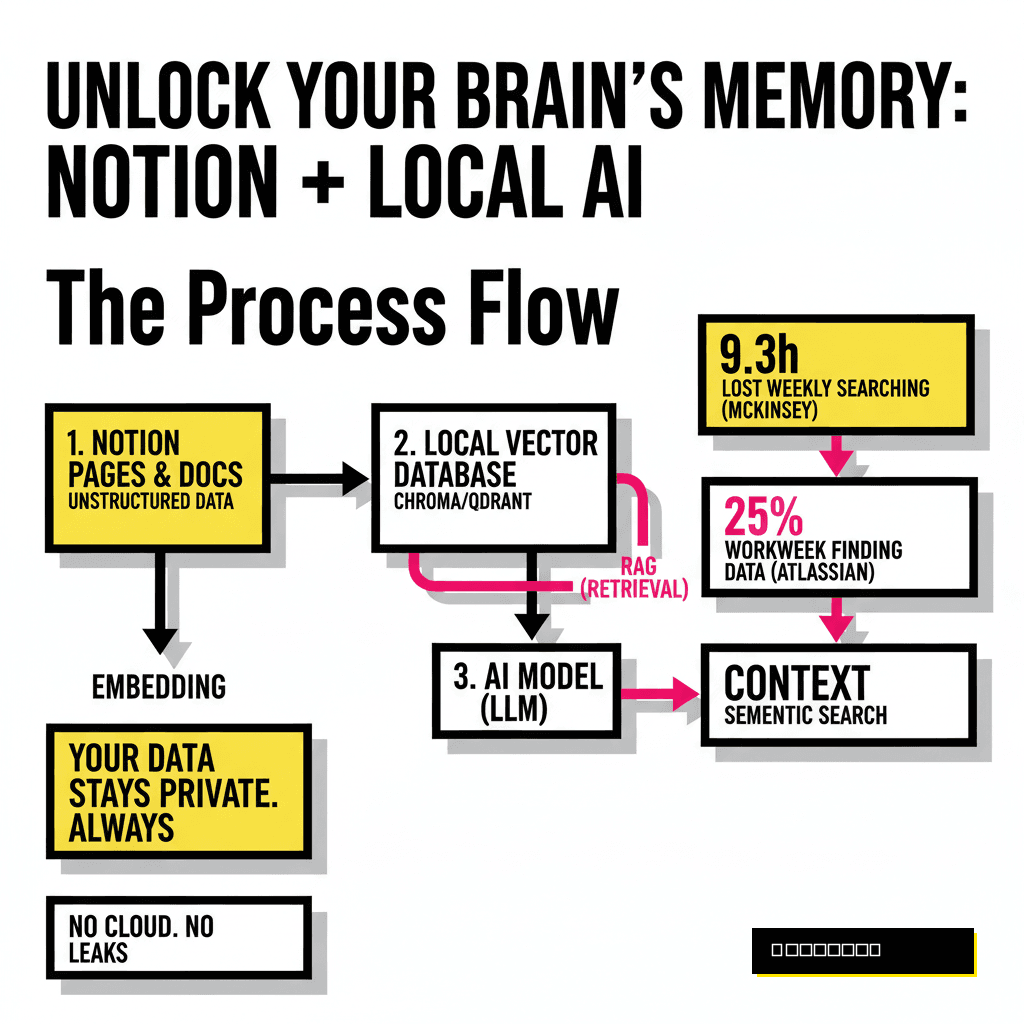
In the early 2020s, we were impressed that AI could write essays. By 2026, we’ve realized the limitation: Large Language Models (LLMs) have a 'knowledge cutoff.' They don't know what happened in your Tuesday morning seminar. RAG solves this by connecting the LLM to an external data source—your study materials.
The process is simple: When you ask a question, the system searches your documents for the most relevant paragraphs, hands those paragraphs to the AI, and says, 'Use this specific info to answer the user.' This virtually eliminates hallucinations (making things up) because the AI is grounded in the facts you provided.
Why Custom Beats Generic
You might ask, 'Why not just upload my files to a public AI?' Three reasons: Privacy, Precision, and Persistence. Generic tools often use your data for training. A custom local or private RAG system keeps your intellectual property yours. Furthermore, generic tools often struggle with 500-page textbooks; a custom RAG pipeline allows you to optimize how that data is 'chunked' and indexed for your specific exam format.
The Blueprint: Your Technical Stack
To build this, you don't need a supercomputer. Most of these tools offer free tiers for students or can run locally on a modern laptop.
| Component | Recommended Tool | Why it Works |
|---|---|---|
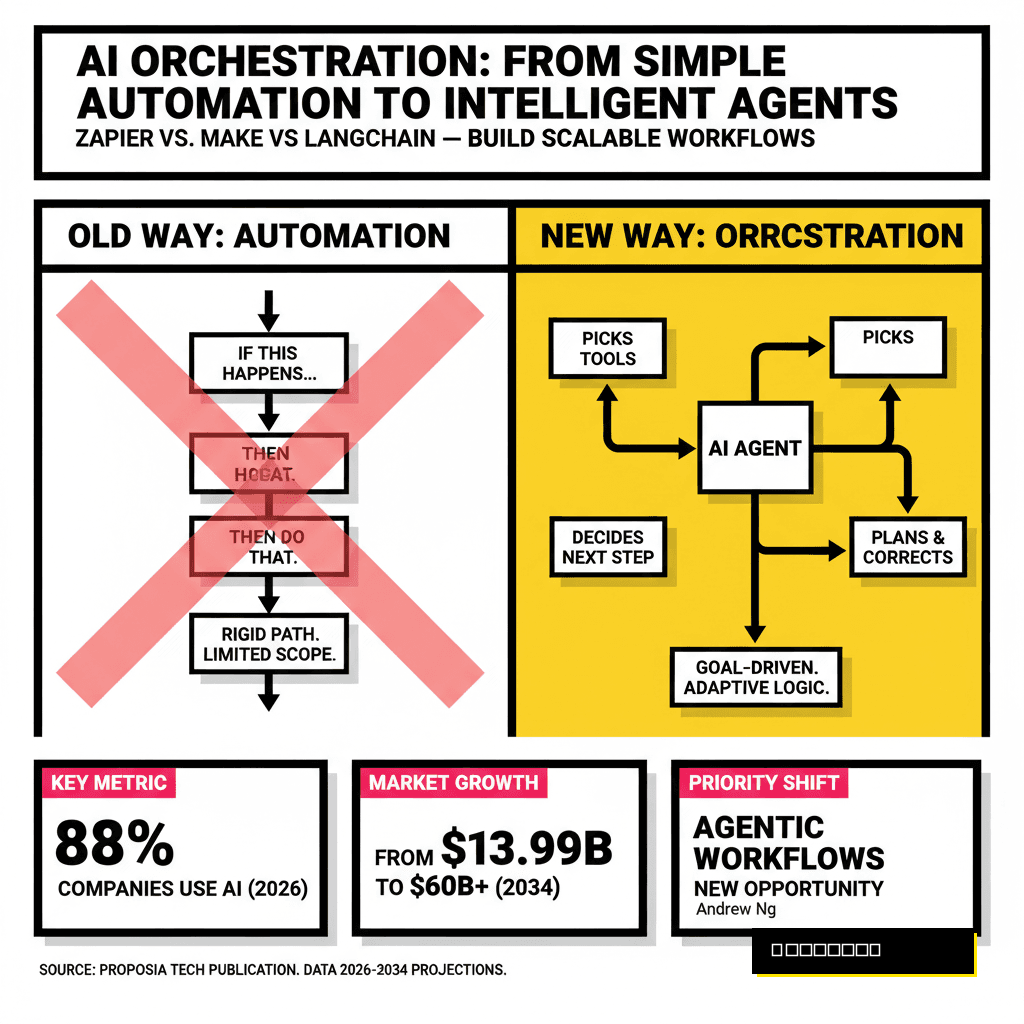
| Orchestration | LangChain or LlamaIndex | The 'glue' that connects your files to the AI. |
| Vector Database | Pinecone or ChromaDB | Stores your notes as mathematical vectors for fast searching. |
| The 'Brain' (LLM) | GPT-4o or Claude 3.5 Sonnet | High reasoning capabilities for complex academic subjects. |
| Local Runner | Ollama | Perfect for running models offline during library sessions. |
Step 1: Data Ingestion & Preprocessing
Your AI is only as good as its inputs. Start by gathering your PDFs, PowerPoint slides, and markdown notes. The challenge? AI doesn't 'read' like we do. It sees a giant block of text as an overwhelming soup of data.
We use a technique called Chunking. This breaks your 40-page chapter into 500-word pieces. In 2026, we recommend Semantic Chunking. Instead of cutting text mid-sentence, semantic chunkers use a mini-AI to find where a topic naturally ends and a new one begins. This ensures that when the assistant retrieves a 'chunk,' it contains a complete thought.

Step 2: Creating Embeddings
Once your notes are chunked, you need to translate them into 'Embeddings.' An embedding is a long string of numbers that represents the meaning of the text. For example, the words 'Mitosis' and 'Cell Division' will have very similar numerical signatures, even though they share no letters. We store these numbers in a Vector Database.
Step 3: The Retrieval Loop
This is where the magic happens. When you type 'What are the three main causes of the French Revolution according to Professor Smith?', the following complex interaction occurs:
Step 4: Writing the Perfect System Prompt
To make this a Study Assistant rather than just a search engine, you need a specialized 'System Prompt.' This is the hidden instruction that tells the AI how to behave. Here is a template for Proposia readers:
"You are an expert academic tutor for [Subject]. Use the provided context from my lecture notes to answer questions. If the answer isn't in the notes, say 'This wasn't covered in your materials.' Always provide a 'Self-Test' question at the end of your answer to help me prepare for the exam."
This simple addition transforms a passive tool into an active learning partner. It forces you to engage with the material rather than just reading it.
Step 5: Building the Interface
You don't need to build a complex website. Using a Python library called Streamlit, you can create a clean, functional chat interface in about 20 lines of code. It allows you to drag and drop new PDFs into your assistant on the fly, making it easy to update your knowledge base as the semester progresses.
Advanced Tip: Agentic RAG
For those looking for an 'A+', consider Agentic RAG. Instead of just searching once, an agentic system evaluates your question. If it's a complex question like 'Compare the 2008 financial crisis with the 1929 crash based on my History and Econ notes,' the agent will realize it needs to perform two separate searches, synthesize the data, and then present a comparison. This is the gold standard of study assistants in 2026.
Ethics and Academic Integrity
A word of caution: Your RAG assistant is a tutor, not a ghostwriter. Use it to clarify concepts, summarize dense readings, and quiz yourself. Using it to generate take-home exam answers is not only a violation of most university policies but also robs you of the actual learning process. The goal is to use the AI to get the information into your brain, not just into a Word document.
Conclusion: The Future of Personalized Learning
By building your own RAG-based study assistant, you are doing more than just preparing for an exam. You are mastering the fundamental technology of the late 2020s. You are moving from a consumer of AI to a creator. As you head into your finals, remember: The student with the best notes used to win. Now, the student with the best data pipeline wins. Welcome to the future of education.