The Price of Autonomy in the Age of Agents
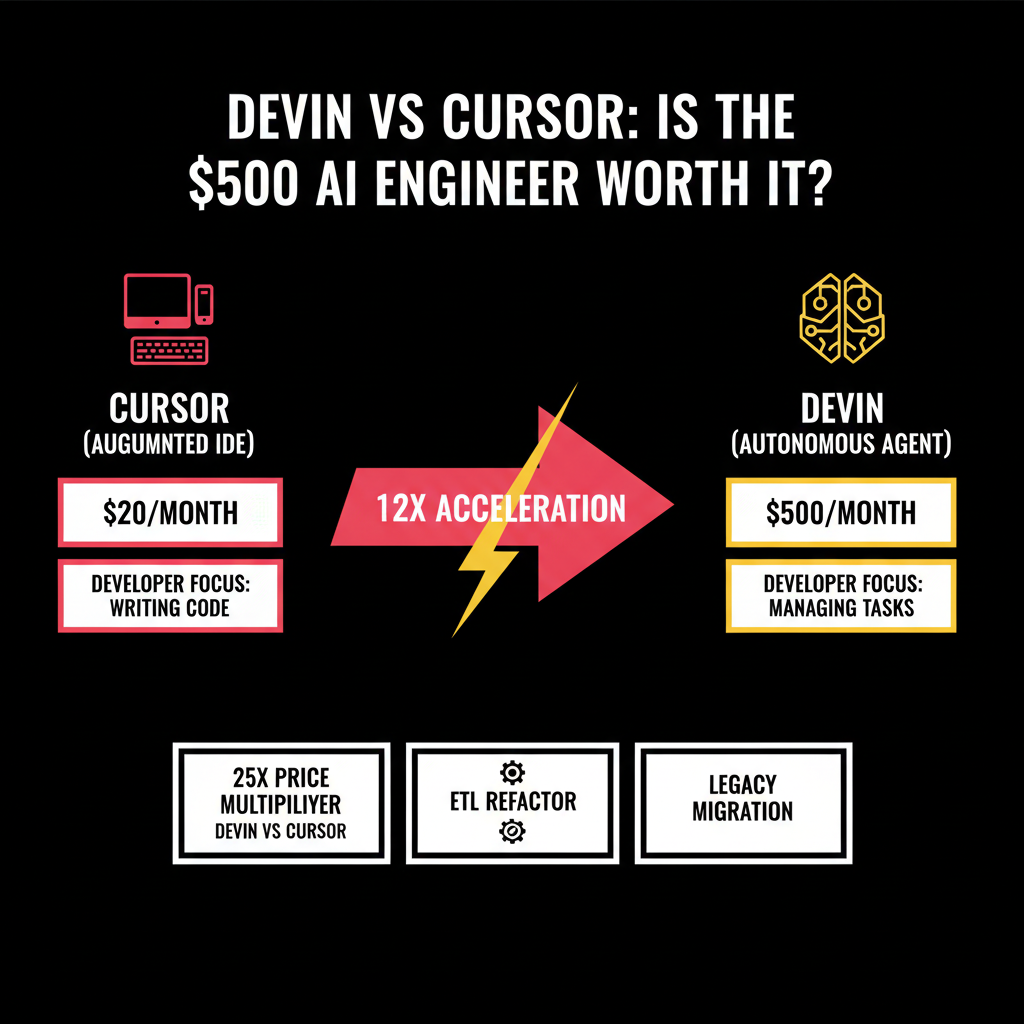
Software development costs have fundamentally shifted as we move through 2026. Founders now face a choice that did not exist two years ago. You can either equip your developers with high-octane IDEs like Cursor or delegate entire workstreams to autonomous agents like Devin. The price gap remains stark. While a standard Cursor Pro seat costs roughly $20 per month, the entry point for high-compute agentic engineering often hits $500 for a team license. This creates a massive delta in expectations. If you are paying twenty-five times more for a tool, it must do more than just finish your loops. It needs to replace a human or at least act like one.
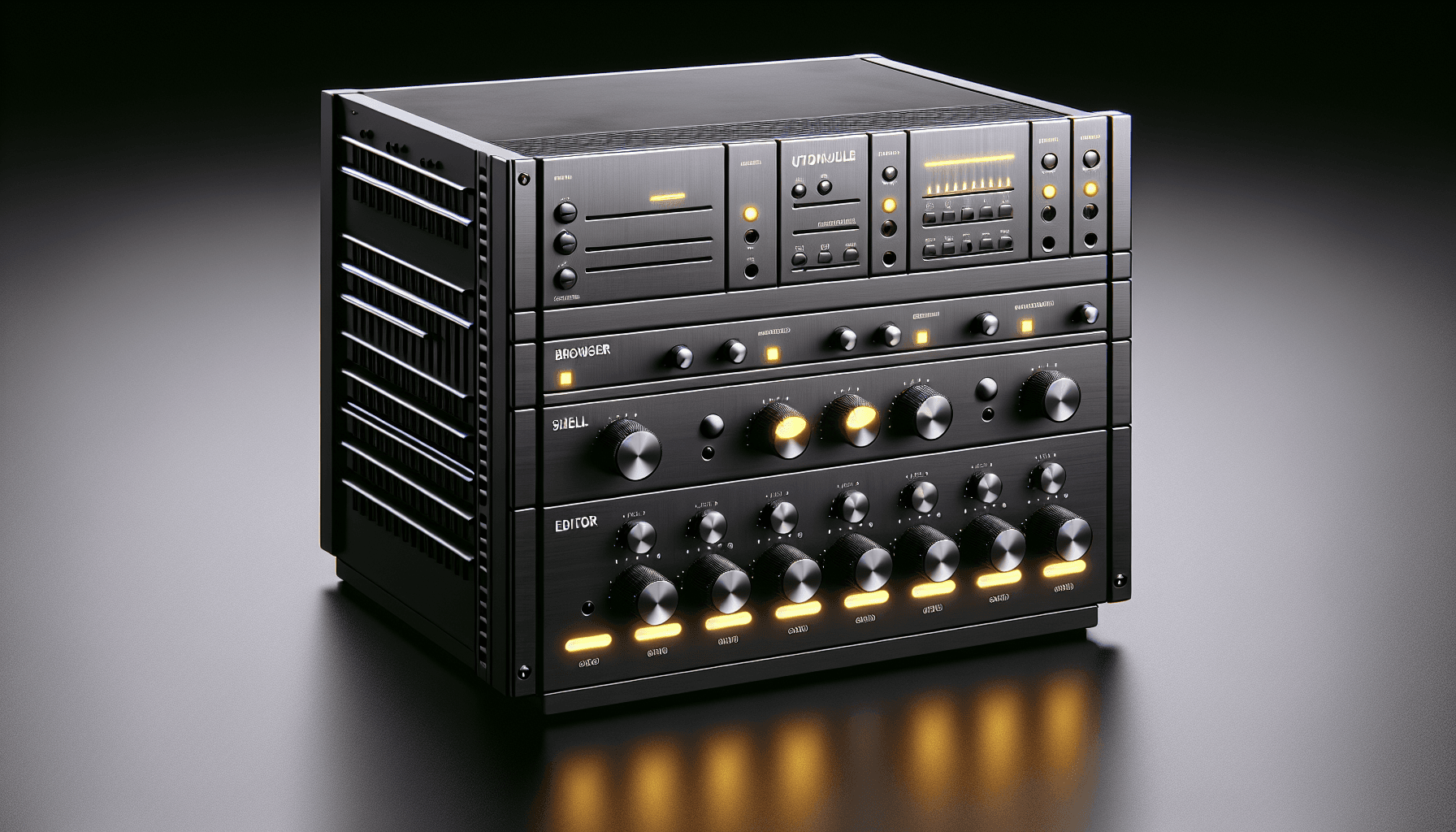
Devin represents a move toward the agentic engineer. It is not just a plugin. Cognition AI designed it to operate with its own browser, shell, and editor. It can ingest a Jira ticket, research a library, write the implementation, and run its own tests. Cursor, on the other hand, focuses on the developer flow. It is a fork of VS Code that indexes your entire codebase to provide hyper-accurate context. One tool wants to be your colleague. The other wants to be your power suit. For most startups, the decision comes down to where the bottleneck lies: in the writing of the code or the management of the task.

The Economics of the $500 AI Subscription
Startups often view $500 per month as a high expense for a single software tool. Consider the alternative, however. According to 2026 PayScale data, a senior software engineer in the United States earns an average of $132,267, with top earners in tech hubs easily clearing $200,000. When you factor in benefits and equity, a single human hire costs a startup roughly $18,000 to $22,000 per month. A $500 AI subscription is less than 3% of that cost. If an agent like Devin can handle just 10% of a senior engineer's workload, the ROI is already three times the investment.
Efficiency gains are the primary driver here. Early reports from companies like Nubank indicate that Devin can accelerate certain migrations by up to 12 times. For a startup trying to refactor a monolithic ETL or migrate a legacy database, these hours translate directly into faster time-to-market. You are not just buying a tool. You are buying the ability to let your human engineers focus on high-level architecture while the agent grinds through the repetitive tasks. This is the core of the agentic shift we are seeing across the industry. We are moving from tools that help us code to systems that code for us.
Cursor: The Developer's Flow State Engine
Cursor remains the gold standard for daily coding. Most developers do not want an agent to take over their entire day. They want a tool that eliminates friction. Cursor does this by maintaining a deep index of your files. When you use the "Composer" feature, you can ask for a multi-file change, and the IDE handles the boilerplate while you watch. It feels like an extension of your own thought process. Because it runs locally and integrates with VS Code extensions, it does not disrupt the existing ecosystem. Many teams find that 9 AI coding extensions can provide similar value, but Cursor's native integration of the model into the editor window makes it uniquely efficient.
Latency is the silent killer of productivity. Cursor understands this. By using models like Claude 3.5 Sonnet or GPT-4o with optimized caching, it provides near-instant suggestions. Developers report a 126% jump in productivity when using the IDE's codebase-aware features. At $20 a month, it is the most obvious upgrade any startup can make. The tool does not try to be a person. It tries to be the best possible version of a text editor. This focus on the "human-in-the-loop" model is why it has reached over a million paying users by early 2026.
Devin: The Autonomous Software Engineer
Devin operates on a different plane of existence. It is a full-stack agent. When you give Devin a task, it does not just suggest the next line of code. It creates a plan. You can watch it open a browser to read documentation for an obscure API. You can see it struggle with a bug, read the error message in the terminal, and then rewrite the function to fix it. This autonomy is what justifies the higher price tag for teams. For a founder with a small engineering team, Devin acts as a force multiplier. It can work on a feature branch while the rest of the team is asleep.
Benchmarks provide a objective look at this power. On the SWE-bench Verified leaderboard, agents are now solving over 70% of real-world GitHub issues. While Devin 2.0 has strong competition from tools like Claude Code, its ability to handle long-running, multi-step sessions remains its selling point. It handles the "boring" parts of engineering—scaffolding, unit testing, and documentation—with a level of persistence that humans often lack. If your startup is bogged down by technical debt or repetitive feature requests, delegating those to an agent is a logical move.
Direct Comparison: Features and Value
Choosing between these two depends on your team's structure. A solo founder might find the $500 investment in a team-capable agent better than hiring a junior developer. A mature engineering team might prefer the low-overhead, high-speed assistance of Cursor. Below is a breakdown of how these tools stack up in the current 2026 landscape.
| Feature | Cursor (Pro/Teams) | Devin (Agentic) |
|---|---|---|
| Monthly Cost | $20 - $40 per user | $80 - $500 per team |
| Primary Mode | Augmented IDE | Autonomous Agent |
| Environment | Local (VS Code Fork) | Sandboxed Cloud VM |
| Autonomy | Low (Requires prompting) | High (End-to-end tasks) |
The Verdict: When to Spend the $500
Startups should view the $500 subscription as a specialized hire rather than a software license. If you have a clearly defined backlog of tasks that are repetitive but complex—such as upgrading 50 microservices to a new version of Node.js—Devin is the superior choice. The cost of a human engineer's time to manage that project is far higher than the cost of the agent. For general feature development where the logic is fuzzy and the UI requires constant tweaking, Cursor is more practical. It keeps the developer in control while removing the manual labor of typing.
Most elite engineering teams in 2026 are not choosing one or the other. They use Cursor for their primary work and keep a Devin seat available for the background tasks. This hybrid approach allows for maximum velocity. You get the speed of an AI-native IDE for creative work and the scale of an autonomous agent for the technical chores. As these models continue to improve, the distinction between "tool" and "teammate" will only get thinner. For now, the $500 investment is worth it if you have the infrastructure to let an agent run wild.
Sourcing Log
- Statistic: Average Senior Software Engineer Salary 2026 (~$132,267) - PayScale
- Fact: Devin (Cognition AI) updated self-serve plans in April 2026, introducing a Teams plan with a $80/mo minimum, while legacy enterprise/team entry points were historically $500 - Cognition AI Official Blog
- Fact: Cursor Pricing 2026 (Pro at $20/mo, Teams at $40/mo) - Cursor Official Site
- Benchmark: SWE-bench Verified scores for top agents in 2026 - SWE-bench Official Leaderboard
- Quote: References to Nubank's 12x efficiency gain with Devin - Devin.ai Case Studies