The air in Silicon Valley is thick with anticipation. While OpenAI has officially transitioned to a rapid-fire release cycle—moving through GPT-5.1, 5.2, and the current 5.4 iterations—the "true" successor that promises a leap toward Artificial General Intelligence (AGI) remains the subject of intense speculation.
As of April 2026, internal leaks and executive breadcrumbs suggest we are standing on the precipice of a shift from "Chatbots" to "Reasoning Agents." Here is a deep dive into the latest whispers surrounding OpenAI’s next frontier.
1. Beyond Chat: The Rise of "Project Garlic"
While the public has been using GPT-5.4 Thinking, insiders point toward a more robust internal project codenamed "Garlic." This isn't just an incremental update; it’s rumored to be the foundation for what many are calling the "Agentic Era."
Real-Time Reasoning: Unlike previous models that "think" in a linear fashion, Garlic is reportedly capable of branching logic. It can explore multiple solutions to a problem simultaneously before presenting the most viable one.
Massive Context Windows: Leaks suggest the next iteration will push beyond the current 400,000-token limit, potentially allowing users to drop entire code repositories or 1,000-page legal documents into a single prompt without "forgetting" the beginning.
2. Solving the "Unsolvable": Mathematical Breakthroughs
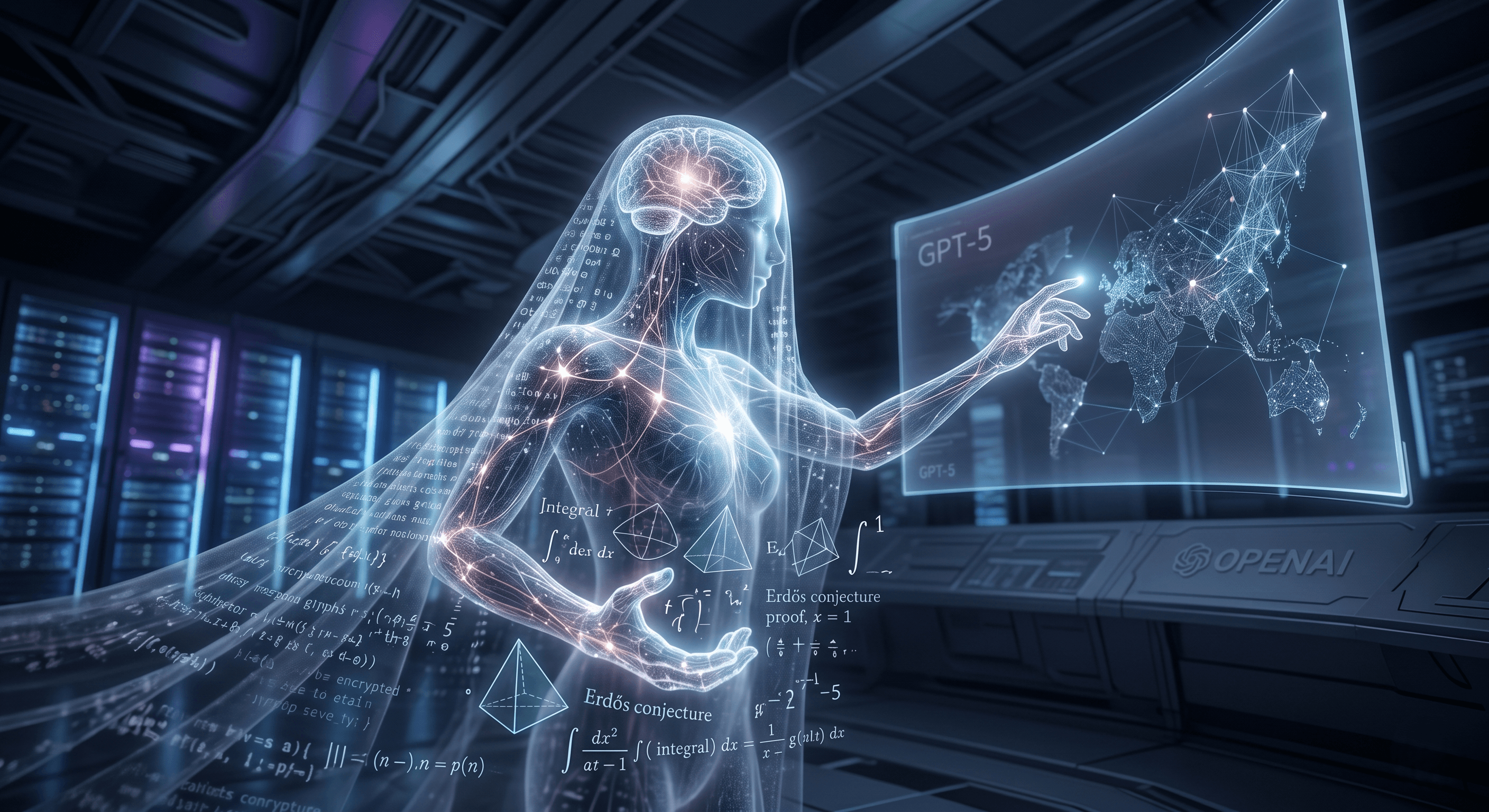
The most startling rumors involve GPT-5.4 Pro’s performance on high-level mathematics. Reports recently surfaced that the model solved a longstanding open Erdős math problem in under two hours—a feat that typically requires years of human effort from the world’s leading mathematicians.
This shift suggests that OpenAI is moving away from just "predicting the next word" and toward systematic discovery. If an AI can solve unsolved conjectures, the gap between "helpful tool" and "autonomous researcher" has effectively vanished.
3. The Scaling Wall and "Compute Phasing"
For years, the industry followed the mantra: More data + More GPUs = More Intelligence. However, 2026 has shown us that "web-scraping" has hit a wall—we’ve effectively run out of high-quality human text.
To bypass this, OpenAI is reportedly utilizing "Compute Phasing":
Synthetic Data Loops: Using models like o3 and o4-mini to generate high-quality training data for the larger GPT-5 flagship.
Inference-Time Scaling: Instead of just being smarter because it's bigger, the next model is smarter because it spends more energy thinking about your specific question before it answers.
4. Is This AGI? The "Personalization" Shift
Sam Altman has recently moved away from the term "AGI," calling it a "moving goalpost." However, the roadmap for late 2026 points toward Long-Term Memory.
Internal memos suggest the next major update will allow the model to:
Learn from every interaction: No more "starting fresh" in every chat.
Autonomous Workflows: Conducting deep web research and executing tasks (like booking travel or managing a project) while the user is offline.
Empathetic Calibration: Moving away from the "robotic tone" that critics of the early GPT-5 release complained about, toward a more fluid, human-like interaction style.
"Once you see AGI, you can't unsee it. It has a real 'ring of power' dynamic." — Sam Altman, 2025/2026
5. What to Expect Next: The GPT-6 Horizon
While we are still perfecting the GPT-5 ecosystem, the "Spud" project (the internal name for GPT-6) is already finishing its training run in the Abilene, Texas data center. If the whispers are true, GPT-6 will not just respond to instructions; it will anticipate them, marking the official transition from AI as a tool to AI as a collaborator.
Summary of Leaked Specs (April 2026)
FeatureGPT-5.4 (Current)Project "Garlic" / GPT-5.5 (Rumored)Logic/ReasoningLinear "Thinking"Branching/Parallel ReasoningContext Window400k Tokens1M+ TokensAutonomyHigh (Human in loop)Full Agentic CapabilitiesScientific DiscoveryAssistiveIndependent Hypothesis Generation
The "Whispers" aren't just about faster chat anymore. They are about a system that can think, remember, and solve the world’s hardest problems. Whether we call it AGI or not, the world of 2027 is looking increasingly automated.