The Great Decoupling: Why 'AI Literacy' is No Longer Enough
As of April 20, 2026, the job market has undergone a fundamental shift. We have moved past the era of 'AI literacy'—the simple ability to talk to a chatbot—and entered the era of the AI-Native professional. In this new economy, employers are no longer looking for candidates who can 'use' AI; they are looking for architects who can orchestrate multi-agent systems, manage autonomous workflows, and maintain the 'Human Delta' in a sea of algorithmic efficiency.
For students graduating into this landscape, the stakes have never been higher. The traditional entry-level role is vanishing, replaced by 'Junior AI Orchestrator' positions that require a sophisticated understanding of how to leverage Large Action Models (LAMs) and specialized vertical agents. If you are starting from zero, you aren't just behind; you are invisible to the algorithmic filters that now screen 90% of global resumes.
This is your 4-week intensive roadmap. We are moving from basic prompting to agentic mastery. Welcome to Proposia’s definitive guide to the new professional frontier.

Week 1: Foundations & The 'Thinking in Chains' Mindset
Week one is about deconstructing your relationship with technology. Most students treat AI like a search engine. An AI-native treats AI like a highly capable, slightly literal intern with infinite stamina. Your goal this week is to master Chain-of-Thought (CoT) reasoning and Contextual Engineering.
The Technical Stack
Before you begin, you must go beyond the free tier. In 2026, your AI subscription is as essential as your laptop. You should be fluent in the 'Big Three' ecosystems:
- OpenAI o4/o5: For high-reasoning tasks and complex logic.
- Claude 5: For nuanced writing, coding, and large-context document analysis.
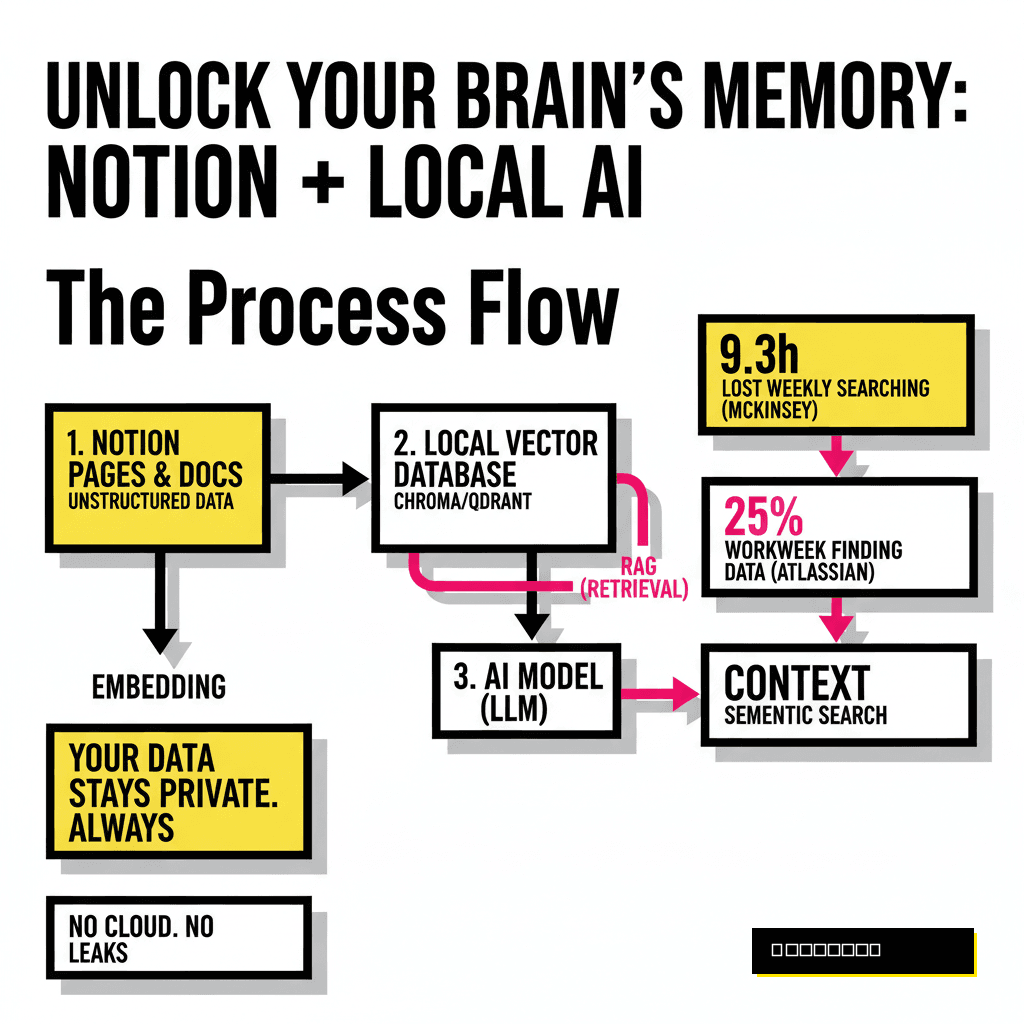
- Local LLMs (Llama 5): Using tools like LM Studio for privacy-sensitive data handling.
Focus on Context Windows. In 2026, models handle millions of tokens. Learning how to 'feed' an entire textbook or a 50-file codebase into a model to provide context is a prerequisite for any meaningful work. You are no longer writing prompts; you are building environments for the AI to inhabit.
Week 2: From Chatbots to Autonomous Agents
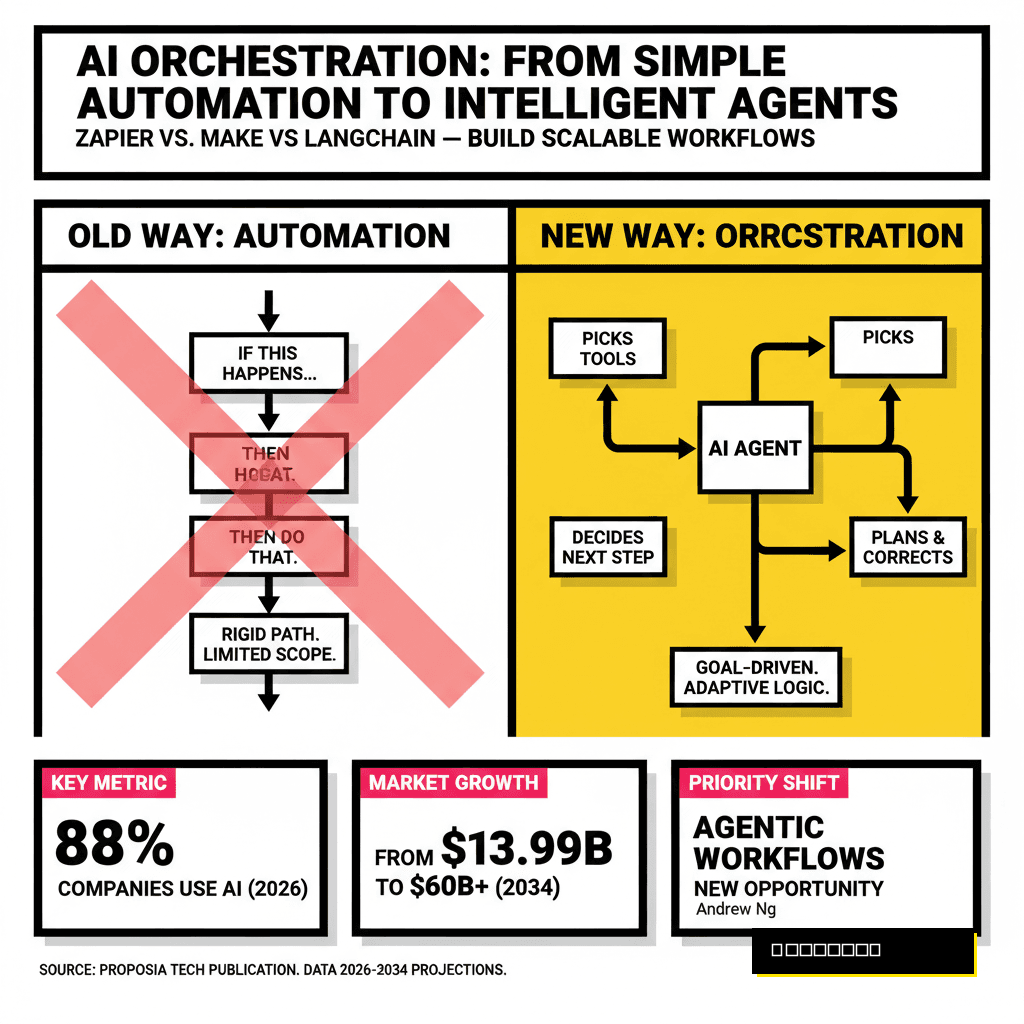
In Week 2, we move from interruption to delegation. The single greatest shift in 2026 is the rise of the Autonomous Agent—systems that can use tools (browsers, terminals, APIs) to achieve a goal without constant human oversight.
The Agentic Logic Flow
You need to understand how an agent thinks. It isn't a linear path; it's a loop of perception, reasoning, and action. For example, if you ask an agent to "Research the 2026 semiconductor market in Southeast Asia and write a report," the agent must decide which tools to use, verify its own findings, and correct errors in real-time.
Your task this week is to build a Personal Agentic Workflow. Use platforms like LangChain or Auto-GPT 2.0 to automate a recurring academic or professional task. If you're a marketing student, build an agent that monitors social trends, drafts content, and suggests an ad spend—all in one loop. This is what 'experience' looks like in 2026.
Week 3: Domain Specialization & The AI Portfolio
Generalists are being automated. Specialists who use AI are thriving. Week 3 is about applying your new skills to your specific major or career path. You must create a 'Proof of Work' project that demonstrates you can solve domain-specific problems using AI orchestration.
Industry-Specific AI Applications
- Computer Science: Move beyond Copilot. Use Devin 2.0 or similar agents to manage entire repository migrations or feature implementations. Your portfolio should include the 'Agent Logs' showing how you guided the AI through complex debugging.
- Finance/Business: Master RAG (Retrieval-Augmented Generation). Build a system that can ingest 500-page SEC filings and answer nuanced questions about liquidity risks that a standard LLM would hallucinate.
- Creative Arts/Design: Focus on Controllable Generation. It's not about 'generating an image'; it's about using tools like ControlNet and LoRA to maintain consistent brand identity across 1,000 AI-generated assets.
"In 2026, your resume is a static document. Your AI-Native Portfolio is a living demonstration of how you think alongside machines. Don't show me the result; show me the architecture of the solution." — Elena Vance, Head of Talent at NeuraLink Corp.
Week 4: The AI-Native Career Strategy
In the final week, we focus on the 'Last Mile'—getting hired. The recruitment process itself is now AI-driven. Applicant Tracking Systems (ATS) in 2026 don't just look for keywords; they use LLMs to simulate how you would solve a problem based on your past project descriptions.
The Algorithmic Interview
Prepare for the 'Synthetic Interview'. Many firms now use AI avatars to conduct first-round screenings. These avatars are trained to look for Agentic Reasoning. When they ask a question, don't just give an answer. Explain the *workflow* you would build to find the answer. Use phrases like, "I would deploy a research agent to scrape X, use a reasoning model to synthesize Y, and then apply a human-in-the-loop check for Z."
| Phase | Daily Focus | Key Outcome |
|---|---|---|
| Week 1 | CoT Prompting & Context Engineering | Zero-hallucination outputs |
| Week 2 | Agentic Workflow Construction | Autonomous task completion |
| Week 3 | Domain-Specific Portfolio Build | Proof of AI-Orchestration |
| Week 4 | Algorithmic Job Hunting | Signed offer letter |
Conclusion: The Human Delta
As you complete this roadmap, remember that the goal of becoming AI-Native isn't to become a machine. It is to free yourself from the mechanical tasks so you can focus on what we call the Human Delta: empathy, ethical judgment, high-stakes decision-making, and original synthesis. The 2026 job market is ruthless to those who act like bots, but it is a land of infinite opportunity for those who can lead them.
You have four weeks. The tools are ready. The market is waiting. It's time to build your edge.