The Great Saturation: Why Synthetic Content Failed to Win
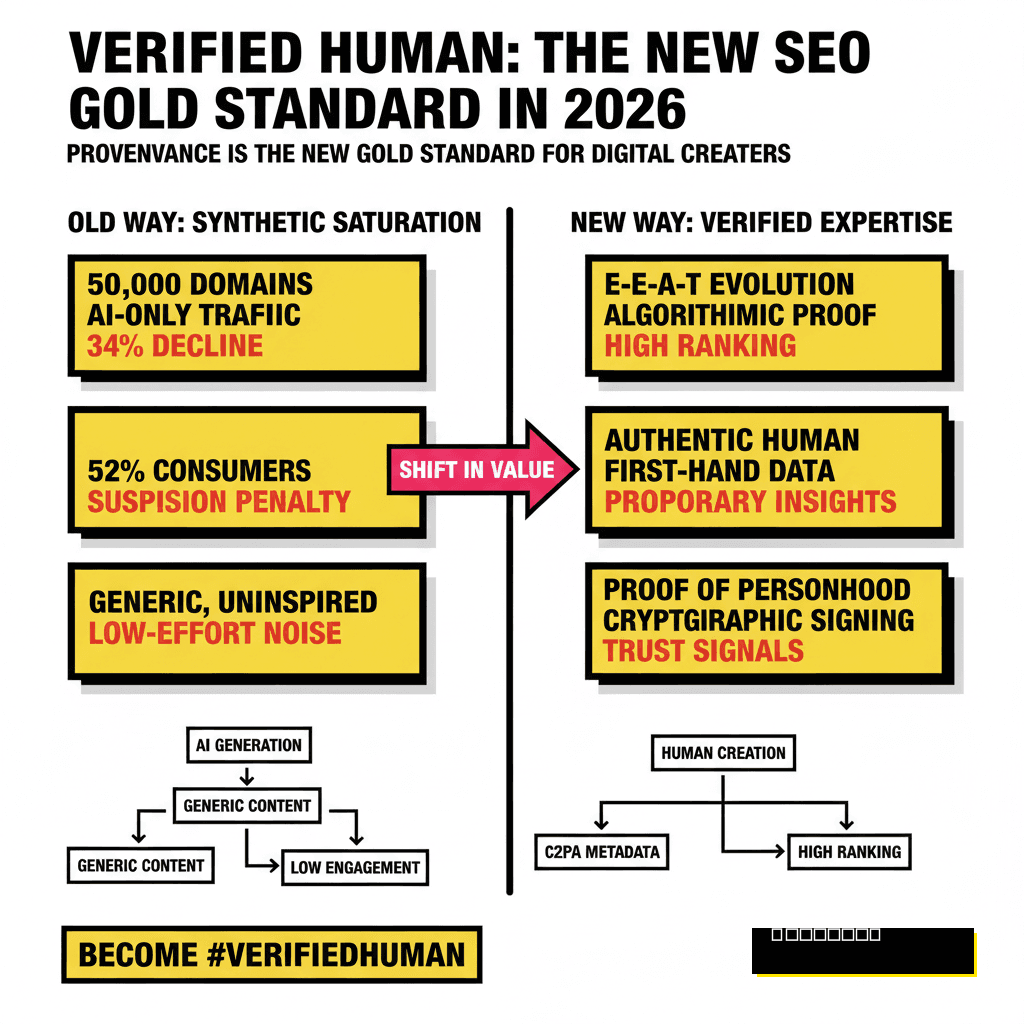
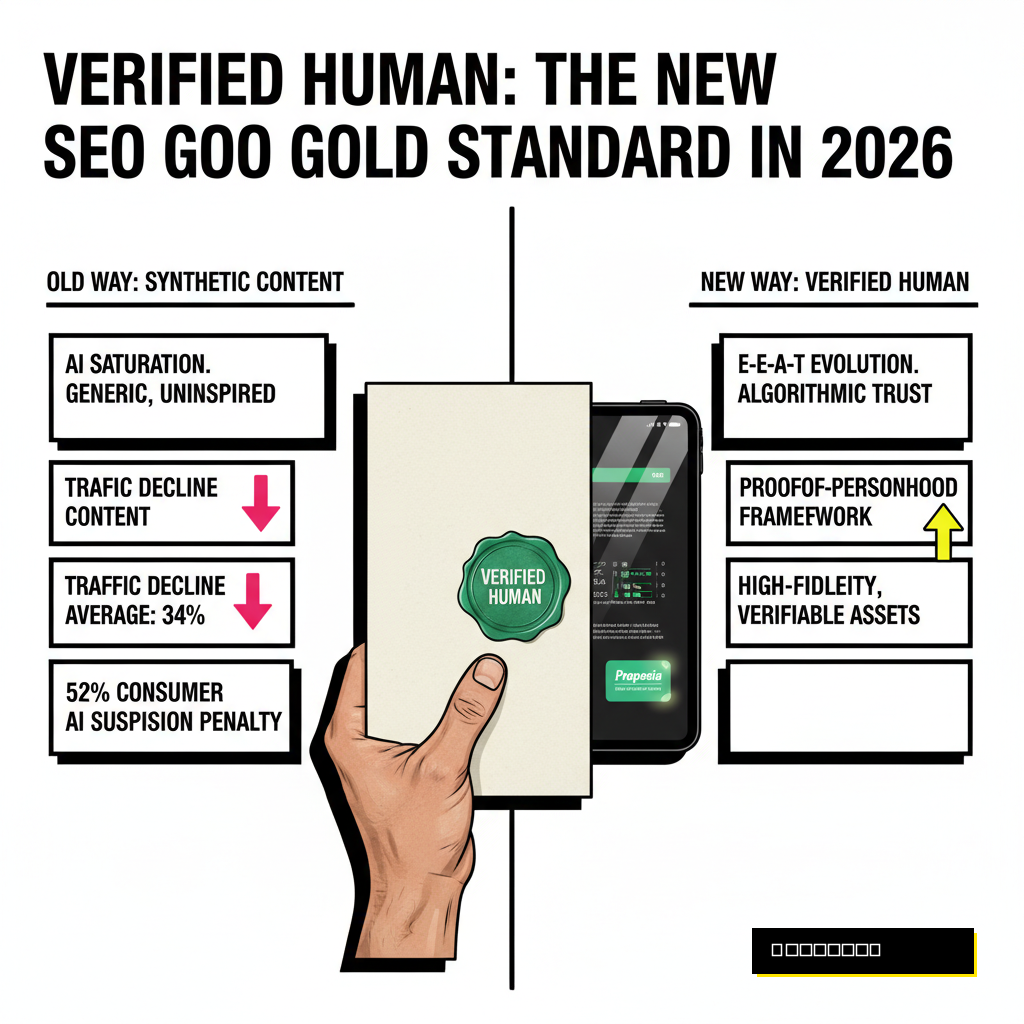
By early 2026, the internet reached a point of total informational entropy. Generative models began training on their own output, leading to a feedback loop of generic, uninspired, and often factually dubious text. Creators who once relied on high-volume AI production are now facing a harsh reality. According to tracking data from major SEO platforms monitoring over 50,000 domains, sites that leaned exclusively on unedited AI content saw traffic declines averaging 34% following the December 2025 Core Update. The novelty of infinite content has worn off, replaced by a desperate search for something real.
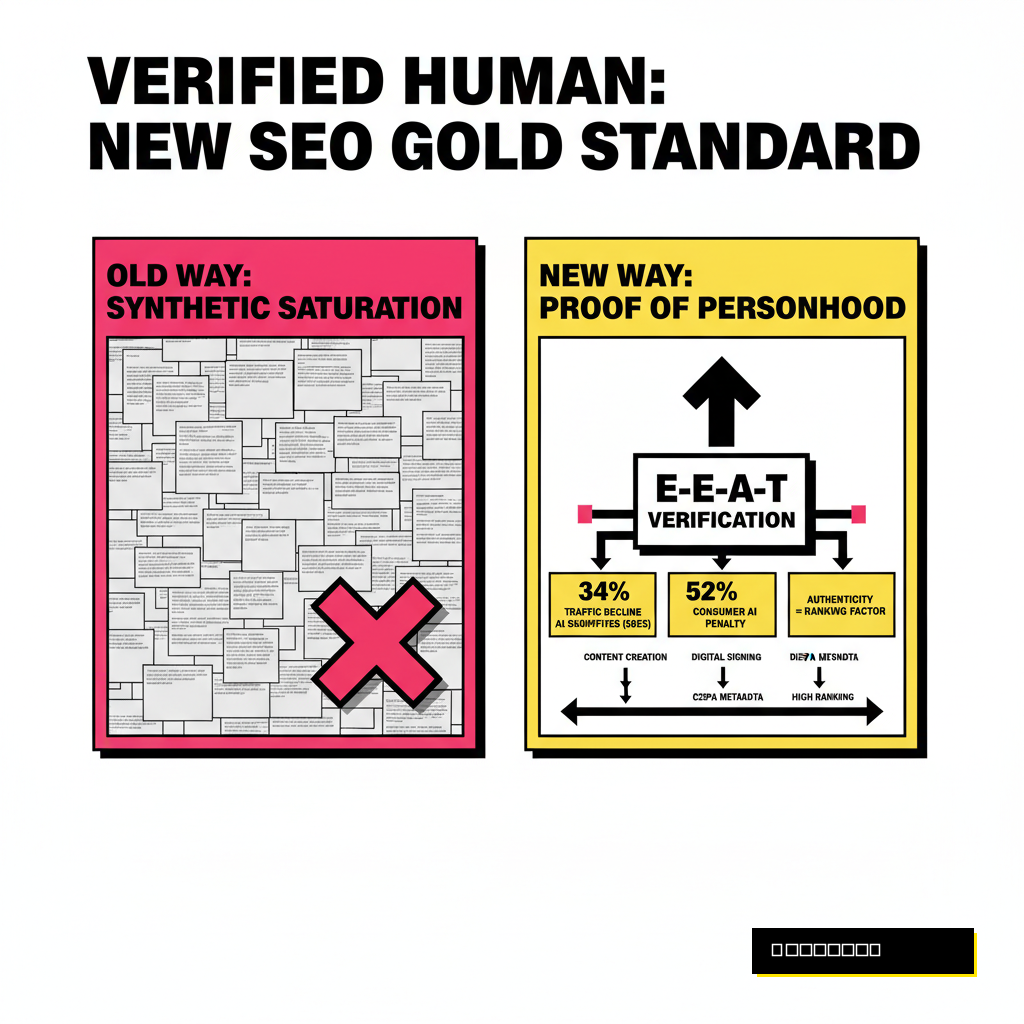
Audiences are feeling the fatigue too. A recent study found that 52% of consumers reduce engagement when they suspect a piece of content lacks a human touch. This "AI suspicion penalty" is not just a social trend. It is a measurable economic drag on brands that prioritize speed over soul. When every blog post sounds like a polite corporate brochure, the one that contains a raw, opinionated, and verified human perspective becomes the only one worth reading. Proposia has observed that the most successful creators are now moving away from mass production toward high-fidelity, verified assets.
Google’s E-E-A-T Evolution: From Theory to Verifiable Proof
Search engines have adapted to this era of synthetic abundance by hardening their quality signals. Experience, Expertise, Authoritativeness, and Trustworthiness (E-E-A-T) are no longer just guidelines for human raters. They are now deeply integrated into the algorithmic ranking process. Google Search Advocate Danny Sullivan has consistently stated that the system focuses on the quality of content rather than how it was produced. However, in 2026, proving that quality requires more than just good writing. It requires a trail of digital provenance that AI cannot easily forge.
Verification now serves as a primary filter for search visibility. Modern algorithms prioritize content that demonstrates authentic human experience, such as first-hand case studies, original data, and proprietary insights. A boutique agency sharing a detailed breakdown of a 387% traffic increase will consistently outrank a generic listicle from a faceless content farm. This shift is explored further in our guide on 2026 AI Compliance, which details how founders must now audit their output for these critical trust signals. Without clear authorship and verifiable credentials, even the most well-written piece risks being categorized as low-effort synthetic noise.
The Proof of Personhood Framework
To survive in the current search environment, creators must adopt a "Proof of Personhood" framework. This involves using cryptographic and social methods to tie content to a specific, living expert. The technology behind this, known as the Coalition for Content Provenance and Authenticity (C2PA), has seen explosive growth. The market for these provenance solutions is valued at $2.06 billion in 2026, reflecting the urgent need for digital trust. By attaching verifiable attribution to articles, images, and videos, you provide a signal that search engines can use to validate your authority.
| Verification Method | Implementation | SEO Impact |
|---|---|---|
| C2PA Credentials | Cryptographic metadata signing | High trust for AI Overviews |
| Biometric Auth | Video or audio voiceprints | Priority in multimodal search |
| Social Proofing | Cross-platform citations | Boosts entity authority |
Implementing these standards often begins at the infrastructure level. Many creators are now using specialized hardware and local models to ensure their data remains private and signed at the source. If you are interested in the technical side of this, our Local LLM Handbook covers the performance and privacy benefits of running models that support these secure workflows. The goal is simple. You want to make it as easy as possible for an algorithm to conclude that a human wrote your content. This level of transparency is becoming the price of entry for competitive keywords.
The Economics of Authenticity: Why Human Wins in 2026
Efficiency gains from AI are undeniable, but they often come at the cost of conversion. While AI enables companies to publish 42% more content monthly, the return on that investment is shrinking for those who do not add a human layer. Engagement metrics like dwell time and return visits are now heavily weighted by Google. If a user lands on a page and immediately senses a generic AI tone, they bounce. This negative signal tells the algorithm that the content failed the "did this actually help" test.
Investing in human-centric search is a strategic moat. A 2026 McKinsey report suggests that while AI handles transactional tasks, the value of human judgment in organizations has risen exponentially. This applies directly to SEO. High-quality AI content with strong human oversight receives normal treatment in search results. However, the pieces that truly break through are those that include opinionated commentary and first-hand experiences that AI cannot easily replicate. Authenticity is no longer just a buzzword. It is a survival strategy for the creator economy.
Building Your Creator Moat: Future-Proofing Strategy
Success in this new environment requires a shift from keyword optimization to brand-building. You must focus on becoming a recognized entity that search engines trust. This involves more than just writing articles. It means showing your face, sharing your unique data, and participating in the broader industry conversation. When users search for your name specifically, Google interprets that as a massive signal of authority, which subsequently boosts your rankings for non-branded queries.
The Synthetic Approach
- High volume, low cost
- Generic, probabilistic text
- Anonymous authorship
- Susceptible to algorithm swings
The Verified Human Approach
- Quality over quantity focus
- Original data and insights
- Cryptographic provenance
- Stable, long-term rankings
Practical steps for creators include adding comprehensive author bios with professional headshots and links to verified social profiles. Including bylines and timestamps on every article demonstrates freshness and accountability. These small details aggregate into a larger trust signal. In an era where AI Overviews handle 25% of global search queries, your content needs to be the definitive, expert source that the AI chooses to cite. Being the cited expert is the new way to win the traffic game.
Practical Implementation: The Verified Tech Stack
The tools you use will define your ability to compete. Moving forward, every piece of your digital presence should be signed and verifiable. Platforms like ContentAuthenticity.org are leading the charge by providing the infrastructure needed for this transition. By adopting these standards early, you position yourself as a trusted leader in a sea of anonymous content. The technology is already being integrated into devices like the Google Pixel 10 and professional cameras, making it easier than ever to capture and publish verified media.
Ultimately, the goal is to provide real value to the person behind the screen. AI can summarize existing knowledge, but it cannot invent, test, or experience the world. Your humanity is your greatest competitive advantage in 2026. By embracing verification and provenance, you ensure that your voice remains heard, respected, and ranked. The gold standard has moved from keywords to character. It is time to prove you are who you say you are.